Scheduled Septic Maintenance
Reliable, routine care that keeps your septic system and plumbing system running right – year after year. We help homeowners avoid system failure and reduce the risk of costly emergency repairs through professional service and expert servicing.
Available 24/7 – Call Now for a Free Quote
Why Choose Lakes Region Septic?
Nationwide service coverage
Licensed and insured technicians
Same-day emergency service
Satisfaction guarantee on every job
5 Highlights on Scheduled Septic Maintenance
Routine pumping and inspection
Our certified technicians pump your septic tank until it is fully pumped, inspect the baffle, inlet pipe, and outlet pipe, and measure both the scum layer and sludge layer to determine system health on a fixed maintenance schedule.
Drain field monitoring
We assess your leach field, distribution box, and lateral lines for signs of saturation, biomat buildup, or effluent surfacing that could signal a failing absorption trench or sewer line issue.
Preventive diagnostics
Each scheduled visit includes a check of your float switch, septic alarm, dosing pump, and control panel so corrective repairs happen before costly failures that require emergency service.
Detailed maintenance log
We document every service call with timestamped records of septage volume, accumulated waste levels, solids accumulation, and component condition, giving you a complete maintenance log for permit compliance and property resale.
Flexible scheduling options
Annual, biannual, or quarterly maintenance plans fit residential and commercial septic systems alike, so your septic tank never goes unserviced past its recommended interval.
Why Choose Our Scheduled Septic Maintenance
Scheduled septic maintenance is the single best investment you can make in your property’s wastewater and plumbing system. Lakes Region Septic has provided professional, trusted service across the region for years, and our team holds every license and compliance certificate required by local and state regulators. We offer savings through preventive care that helps you avoid expensive repairs.
We don’t just show up and pump. Our trained technicians perform a full diagnostic assessment at every visit. They inspect the riser, access lid, inspection port, and cleanout. They evaluate your pump chamber and submersible pump. They test your check valve and backflow preventer. That level of detail separates a qualified septic contractor from someone with a vacuum truck and a hose.
Our service agreements lock in your pricing and guarantee priority scheduling. You pick the frequency. We handle the rest. No missed appointments. No guesswork about when your tank was last serviced. Contact us for a free estimate or quote on any plumbing services related to your septic system.
Every technician on our crew carries certification in septic system inspection and septage handling. Our plumbers comply with all groundwater protection regulations and maintain full liability coverage. We’ve built our reputation on showing up on time, doing thorough work, and keeping honest records.
Lakes Region Septic stands behind every scheduled maintenance visit with a satisfaction guarantee. If something doesn’t look right within 30 days of service, we come back at no charge to restore proper function.
Signs You Need Scheduled Septic Maintenance
Scheduled septic maintenance is the preventive approach that catches problems early. If you’re noticing any of these five warning signs, your system is overdue for professional service and you may be facing an emergency situation.
Slow drains throughout the house:
When multiple fixtures including toilets, shower drains, and faucet drains flow sluggishly at the same time, your septic tank may be overloaded with solids. A toilet that drains slowly, hot water that backs up, or a water heater drain that gurgles can all signal a problem. A clogged outlet pipe or saturated filter media restricts effluent flow from the tank to the drain field. Routine pumping and inspection would have caught this buildup before it backed wastewater into your drainpipes.
Foul odors near the tank or yard:
Odorous gases escaping from a cracked access lid, a damaged riser, or a failing baffle mean anaerobic decomposition is happening without proper containment. These smells often indicate that the scum layer has risen above the outlet tee fitting, pushing untreated blackwater and waste toward your leach field.
Standing water over the drain field:
Soggy, saturated ground above your lateral lines or percolation bed points to a distribution box that isn’t dispersing effluent evenly. Compacted soil, biomat accumulation, broken pipes, or a collapsed infiltrator chamber can all cause this issue. Periodic maintenance identifies these conditions during a scheduled assessment and helps prevent further damage.
Septic alarm activation:
Your septic alarm and float switch exist to warn you when the pump chamber reaches a dangerous level. Repeated alarms suggest a failing dosing pump, a faulty timer, or a control panel malfunction that may require immediate attention. Scheduled diagnostic checks catch these electrical and mechanical issues on a predictable cycle before they become a risk.
Lush, green patches in the yard:
Grass growing faster and greener directly over your absorption trench means nutrient rich effluent is seeping too close to the surface. This signals that your soil’s percolation capacity has degraded and waste disposal is compromised. A qualified inspector can run a percolation test and risk assessment during a maintenance visit and recommend corrective action before the system fails entirely.
Our Scheduled Septic Maintenance Process
Scheduled septic maintenance is a structured, repeatable process designed to keep every component of your system functioning within safe parameters. Here’s how Lakes Region Septic handles each visit to guide you through proper care.

Locate and access the system
Our technician uses your property’s site map to locate the septic tank, riser lids, and inspection ports. We excavate access points if risers haven’t been installed and recommend riser installation for future convenience and to help reduce future service time.
Measure and record levels
We open the access lid and measure the depth of the scum layer and sludge layer based on your tank size. These readings go directly into your maintenance log and determine whether pumping is needed at this visit.
Pump the tank
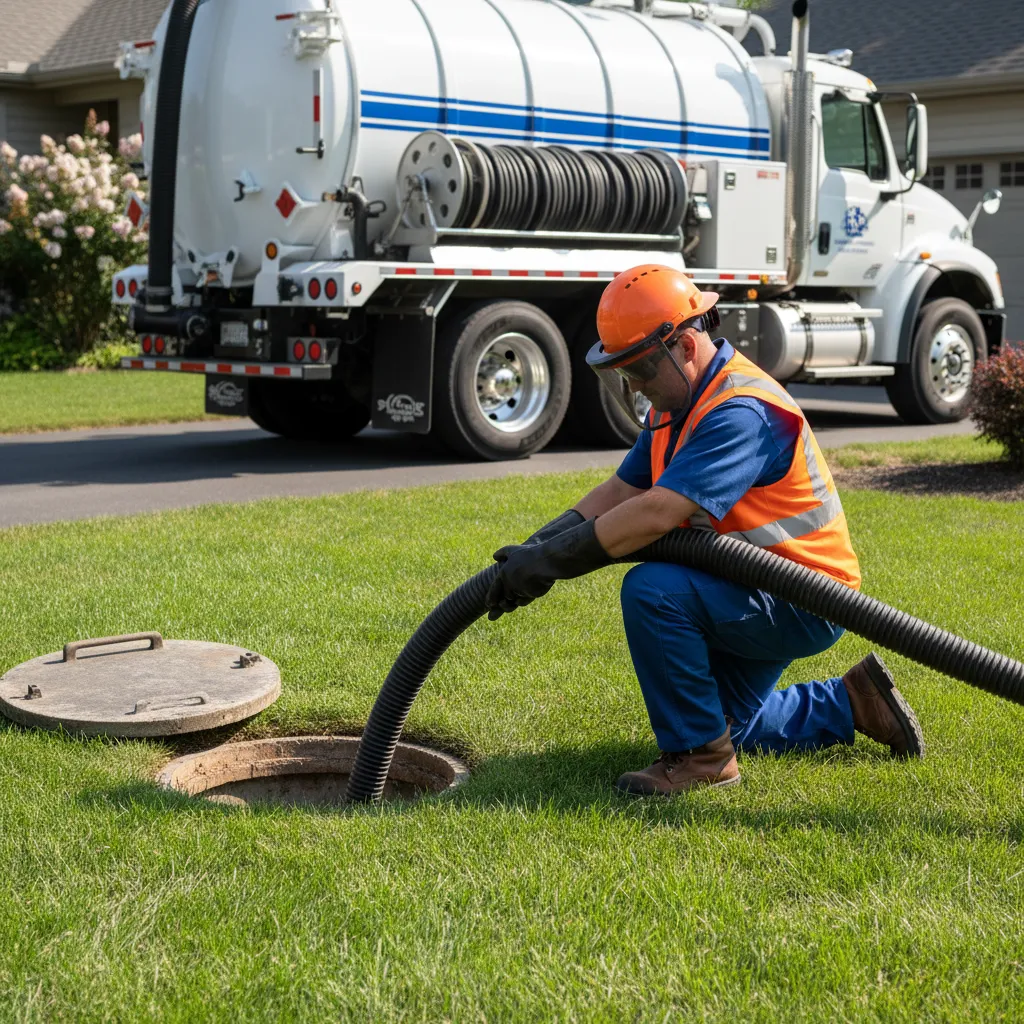
Our vacuum truck evacuates all septage, solids, and accumulated greywater from the tank for proper disposal. We pump until the tank is empty, then visually inspect the interior walls for cracks, corrosion, and watertight integrity.
Inspect all components
The technician checks the baffle, inlet pipe, outlet pipe, tee fitting, filter media, and any installed effluent filter for clog or blockage. We test the float switch, septic alarm, dosing pump, submersible pump, check valve, and control panel for proper operation and clear blockage if needed.
Assess the drain field
We inspect the distribution box, lateral lines, sewer line connections, and header pipe for even flow distribution. We walk the leach field looking for signs of surfacing effluent, saturated soil, or settling ground.
Report and schedule
You receive a written report with findings, photos, and recommendations including any need to replace or upgrade components. We schedule your next maintenance visit based on your service agreement frequency – annual, biannual, or quarterly.
Brands We Use
Scheduled septic maintenance requires dependable equipment and high quality replacement parts.







Every product we install meets or exceeds local code requirements.
Other Services
Scheduled septic maintenance
Septic tank pumping schedule
Septic system maintenance plan
Septic inspection service
Commercial septic pumping
Routine septic tank service
Regular septic pumping service
Annual septic service agreement
Professional septic tank inspection
Scheduled septic tank cleaning
Preventive septic system care
Periodic tank cleaning and inspection
Residential wastewater system upkeep
Drain field assessment and monitoring
Septic compliance and maintenance log
FAQs About Scheduled Septic Maintenance
What is scheduled septic maintenance?
Scheduled septic maintenance is a planned, recurring service that includes pumping your septic tank, inspecting all system components including pipes and plumbing connections, assessing your drain field, and documenting findings in a maintenance log. It keeps your system compliant and functioning properly between visits.
When should I schedule septic maintenance?
Most residential septic tanks need pumping and inspection every one to three years. Household size, tank capacity, tank size, and daily wastewater volume all affect frequency. A qualified technician can recommend an annual, biannual, or quarterly schedule based on your system’s specific conditions.
Why does routine septic service matter?
Solids accumulate in your tank over time. Without periodic pumping, sludge and scum reach the outlet pipe and flow into your leach field. That clogs lateral lines, saturates the soil, and creates a failing drain field – a repair that costs thousands more than preventive maintenance. Frequent maintenance helps prevent this failure and reduces the risk of expensive emergency repairs.
How long does a scheduled maintenance visit take?
A standard visit takes between one and two hours. Pumping the tank, inspecting the baffle and filter, testing the alarm and pump, and walking the drain field all happen in a single appointment. Larger commercial systems or systems needing corrective work may take longer. Our trained plumbers work efficiently to minimize disruption.
Can scheduled maintenance extend my septic system's lifespan?
Yes. A well maintained septic tank and drain field can last 25 to 30 years or more. Regular pumping prevents solids from damaging the distribution box and lateral lines. Catching a leaky baffle or a failing float switch early avoids the kind of damage that leads to full system replacement. Proper maintenance can also reduce the need to replace major components.
Does Lakes Region Septic provide a maintenance agreement?
We do. Our service agreements include scheduled visits at your chosen frequency, priority booking, locked in pricing, and a complete maintenance log that satisfies permit and compliance requirements for your property. Contact us today for a free estimate.