
Septic Tank Installation
Professional septic tank installation for residential and commercial properties across the Lakes Region
Available 24/7 – Call Now for a Free Quote
Why Choose Lakes Region Septic?
Nationwide service coverage
Licensed and insured technicians
Same-day emergency service
Satisfaction guarantee on every job
5 Highlights on Septic Tank Installation
Full site evaluation and perc testing
Our certified technicians perform soil analysis, percolation tests, and site surveys before any excavation begins. We assess local soil conditions including soil type such as sandy loam, clay, hardpan, and cobble to determine how effectively wastewater will percolate. We map setbacks, easements, distance requirements, slope considerations, and water table depth to design a compliant system from the ground up.
Permit coordination with local health departments
Septic tank installation requires permits and compliance with local regulations. We handle all paperwork, engineering drawings, and health department submissions so your project stays on schedule and meets every local code requirement.
Concrete, fiberglass, and polyethylene tank options
We install septic tanks from trusted manufacturers in sizes ranging from 1,000 to 3,000 gallons, including concrete, plastic, and fiberglass options. Each tank selection and proper sizing matches your household hydraulic load, soil absorption rate, daily water usage, and unique configuration of your lot.
Complete drain field and distribution box construction
Every new septic tank system includes a properly graded leach field with perforated pipe, geotextile fabric, and stone drain field media. We connect distribution boxes, lateral lines, and header pipes for even effluent flow, ensuring efficient wastewater treatment and environmentally friendly waste management.
Riser installation and alarm system setup
We fit every new tank with tank risers, access ports, and lids at grade level for lid installation and future maintenance access. Float switch alarm systems come standard on pump chamber and dosing tank configurations, providing integrated control and monitoring.
Our Septic Tank Installation Services:
Why Choose Our Septic Tank Installation
Septic tank installation is a long term investment that demands precision, licensing, and deep knowledge of underground wastewater systems. Lakes Region Septic brings over two decades of hands-on experience installing conventional, mounded, and alternative septic systems across the region. Our dedicated team handles every aspect of system installation with expert planning and execution.
Our installers hold current state certifications and license credentials. Every well-trained crew member understands soils composition, absorption rates, and the engineering behind gravity fed and pressurized field design. We don’t subcontract the work. Our own excavators, backhoes, mini excavators, and trenchers arrive on your property operated by experienced professionals who’ve completed hundreds of installations with owner-supervised quality control.
We guarantee our septic tank installation work with a written warranty covering tank integrity, pipe connections, plumbing, and distribution box assembly for long-lasting performance and longevity. If a baffle fails or a tee fitting leaks within the warranty period, we repair it at no charge – that includes tank repair and all connected components.
Lakes Region Septic also stands apart on communication. You’ll receive a detailed installation timeline with typical timeline expectations, daily progress updates, and a final as built drawing showing every component location. That documentation proves invaluable for future inspections, maintenance, pumping, cleaning, and property sales.
Our pricing is transparent. We provide itemized quotes that break down tank cost, excavation, backfill, pipe materials, and permit fees. Contact us for a free quote – no hidden charges appear after the backhoe leaves your yard.
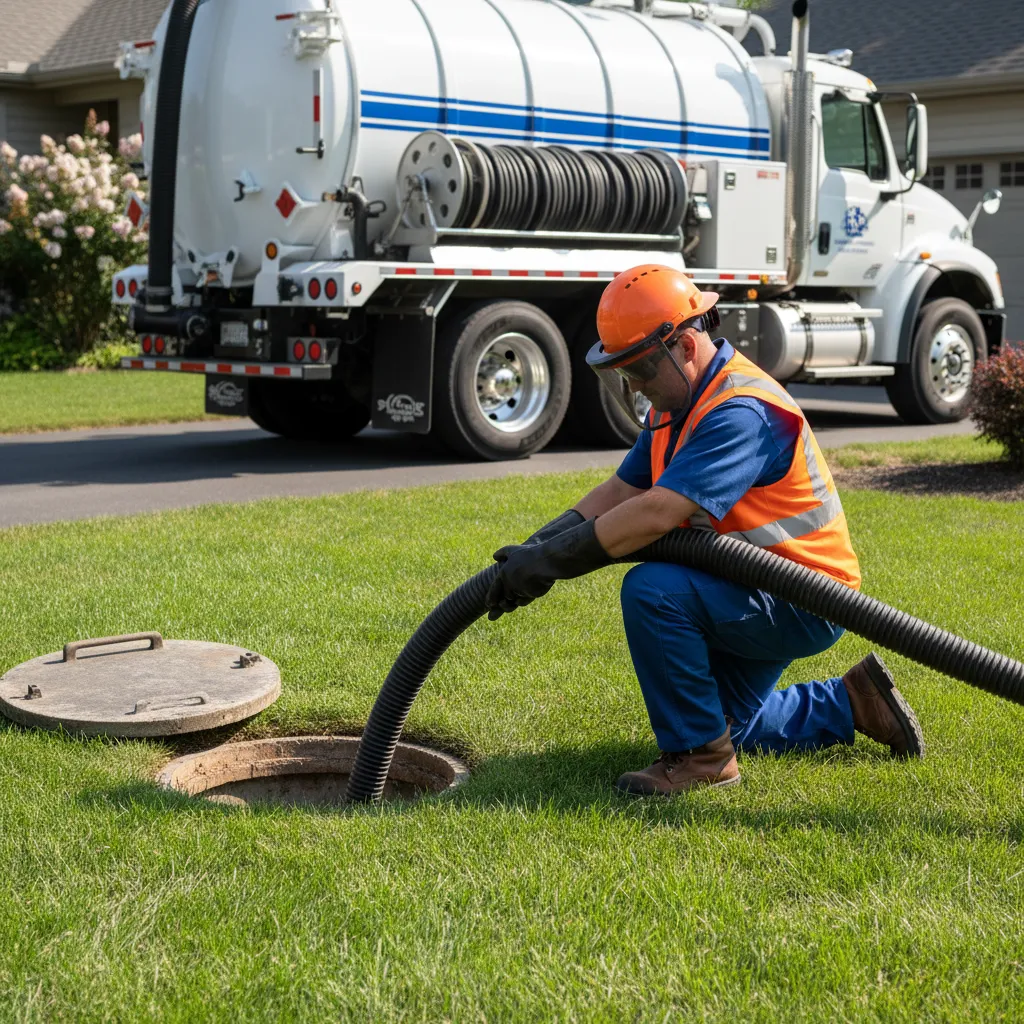
Signs You Need Septic Tank Installation
Septic tank installation becomes necessary under several specific conditions. Recognizing these signs early saves you from contaminated groundwater, property damage, landscape issues, and health department violations.
Your existing septic tank is failing beyond repair:
Cracked concrete walls, corroded baffles, and a collapsed inlet or outlet pipe can render an aging tank non functional. When a camera inspection reveals structural failure in the tank compartment itself and the condition is beyond repairs, replacement through new installation is the only compliant path forward.
You're building a new home on undeveloped land:
Any residential or commercial property without municipal sewer access needs an onsite wastewater system. When you build a new home, a new septic tank installation includes the tank, pump chamber if required, and a full absorption bed or chamber system sized to your projected daily water flow based on detailed calculation.
Sewage is surfacing in your yard:
Saturated soil above the leach field, standing effluent near the tank area, or odorous wet patches signal a system that’s overwhelmed and not functioning properly. If your existing tank lacks adequate detention time or the drain field biomat has sealed off percolation, a modern system installation with properly engineered components and appropriate waste handling solves the problem permanently.
Your perc test results don't match your current system:
Older systems were sometimes installed without proper percolation testing – a test required by modern regulations. A modern perc test may reveal that your local soil absorption rate in heavy clay or other challenging soils requires a mound system, sand filter, or pressurized drip irrigation system rather than the conventional gravity fed setup you currently have.
The health department has issued a non compliant notice:
Failing coliform tests, elevated nitrogen or phosphorus levels in nearby groundwater monitoring wells, or an unpermitted cesspool on your property all trigger mandatory action. A new, code compliant septic tank installation with current treatment level standards resolves these violations.
Our Septic Tank Installation Process
Septic tank installation is a multi phase project that follows a strict sequence with varying complexity depending on site conditions. Here’s how Lakes Region Septic completes every job with in-house expertise.

Site evaluation and soil testing
We survey your property, identify setback distances from wells, structures, and underground utility lines, and conduct a percolation test. Soil samples tell us the absorption rate and whether a conventional, mounded, or alternative system fits your lot – this crucial aspect determines the entire system design.
System design and permitting
Our engineer designs the full system layout including tank size, drain field dimensions, distribution box placement, and pipe routing. We recommend the most appropriate components for your property. We submit plans to the local health department and secure all required permits before breaking ground as an essential part of the inspection process.
Excavation and tank placement
Our excavator and backhoe operators dig the underground tank pit to precise depth and grade specifications. We set the concrete, fiberglass, or polyethylene tank on a compacted base, level it, and verify inlet and outlet elevations. Our team can install septic systems in a wide range of site conditions.
Pipe connections and drain field construction
We trench lateral lines, lay perforated pipe or chamber system infiltrators in stone drain beds with geotextile fabric, and ensure everything is properly connected to the distribution box. Tee fittings, effluent filters, baffles, and check valves go in during this phase for high-functioning efficiency.
Backfill, grading, and final inspection
We backfill around the tank and over the drain field, compact the soil, and perform service grading on the surface for proper drainage. A health department inspector reviews the final installation. We commission the system, test the pump and float switch if applicable, and hand you the as built documentation for your well-maintained system records.
Brands We Use
Lakes Region Septic installs products from these trusted manufacturers:







Every product we install meets NSF/ANSI standards and carries manufacturer warranties.
Other Services
Septic tank installation
Residential septic installation
Septic system installer near me
Commercial septic installation
Septic tank replacement
New septic system install
Home septic tank setup
Licensed septic contractor
Large capacity septic tank install
Replace old septic system
Onsite wastewater system construction
Drain field and tank installation
Perc test and septic permit services
Pump chamber and dosing tank setup
Concrete septic tank installation cost
FAQs About Septic Tank Installation
What does septic tank installation include?
A complete septic tank installation includes the tank itself, a distribution box, drain field with lateral lines and stone drain bed or chamber system, all pipe connections, risers with lids, baffles, effluent filters, and backfill with final grading. Pump chambers, float switches, and alarm systems are included when the design calls for a pressurized system. Grease trap connections can also be integrated when needed for commercial applications.
How long does a new septic tank installation take?
Most residential septic tank installations take three to five days from excavation to final inspection. Larger commercial systems or mound system installations may require seven to ten working days. Weather and permit turnaround times can affect the schedule.
When should I replace my septic tank instead of repairing it?
You should consider new septic tank installation when your existing tank has structural cracks, severe corrosion, a collapsed baffle system, or when the tank size no longer handles your property’s hydraulic load. Tanks older than 30 years often lack modern features like effluent filters and risers, making full replacement the more cost effective choice. Our experts can empty and assess your current system to help you decide.
How much does septic tank installation cost?
Septic tank installation costs vary based on tank material, system type, soil conditions, and drain field size. A conventional gravity fed residential system typically ranges from $7,000 to $15,000. Mound systems, sand filters, and pressurized designs run higher due to additional components and engineering. Utility considerations and underground obstacles can also affect pricing.
Can I install a septic tank on any property?
Not every lot qualifies for a conventional septic tank installation. Soil percolation rates, water table depth, lot size, and setback distances from wells, property lines, and structures all determine what type of system your property can support. A perc test and site evaluation answer this question definitively and help determine the appropriate system type.
Does a new septic tank installation require a permit?
Yes. Every new septic tank installation requires a permit from your local health department. Lakes Region Septic handles the full permit application process, including engineered system drawings and soil test documentation, as part of our standard installation service.