
Residential Septic Tank Installation
Professional septic tank installation services for residential and commercial properties across the Lakes Region – high-quality workmanship from dedicated experts you can trust
Available 24/7 – Call Now for a Free Quote
Why Choose Lakes Region Septic?
Nationwide service coverage
Licensed and insured technicians
Same-day emergency service
Satisfaction guarantee on every job
5 Highlights on Residential Septic Tank Installation
Site evaluation and soil testing
Every residential septic tank installation begins with a thorough perc test and soil profile analysis to determine drain field suitability, water table depth, and bedrock proximity before any excavation starts. Our trained professionals understand that proper site evaluation is essential to prevent issues and ensure environmental compliance.
Permit coordination with local health departments
We handle all permit applications, site plan submissions, and as-built drawings required by your county health department so your new septic system meets every building code and setback regulation. Our expert team addresses your concerns and questions with prompt, reliable support throughout the permitting project.
Precast concrete, fiberglass, and poly tank options
Our skilled team installs high-capacity septic tanks from trusted manufacturers, sized to match your household’s daily wastewater volume and local regulatory requirements. We specialize in handling solids disposal efficiency and selecting appropriate tank options tailored to your property.
Complete drain field construction
We excavate trenches, place distribution boxes, lay perforated lateral lines over gravel beds with geotextile fabric, and backfill and grade the absorption area for proper effluent percolation. Every drain field is designed and built to function properly, ensuring wastewater management safety and reducing environmental concerns.
Final inspection and system certification
A licensed inspector verifies every connection, baffle, riser, inlet pipe, and outlet pipe before we compact the surface and certify your residential septic tank installation as fully compliant. We strive to help each customer achieve quality results with confidence, following all regulations.
Why Choose Our Residential Septic Tank Installation
Residential septic tank installation is a long-term investment in your property. Lakes Region Septic has installed hundreds of septic systems for homeowners who need a qualified, licensed contractor they can trust with their home’s wastewater infrastructure. Our experience and knowledge have made us known throughout the community for reliable, professional service.
Our certified septic service technicians carry active state licenses and complete ongoing training on conventional gravity-fed systems, mound systems, chamber systems, and advanced treatment units. We don’t subcontract the work. Our own dedicated crews operate every backhoe, excavator, and piece of equipment on your property, ensuring care and attention to detail on every project.
We provide a written workmanship guarantee on every residential septic tank installation. That covers the tank, the distribution box, all PVC pipe connections, the drain field trenches, and the backfill grading. If something we installed fails within the warranty period, we fix it at no charge. Our commitment to quality and tank maintenance support gives you confidence in your investment.
Lakes Region Septic also stands apart because we manage the full scope of work. We survey the site. We pull the permits. We perform the perc test. We install the tank and build the leach field. We schedule the health department inspection. You get one point of contact from the first soil test to the final certification. That’s the professional, streamlined approach homeowners in this region deserve from a top-rated septic contractor. Contact us for a quote and expect prompt, expert service from our working team.
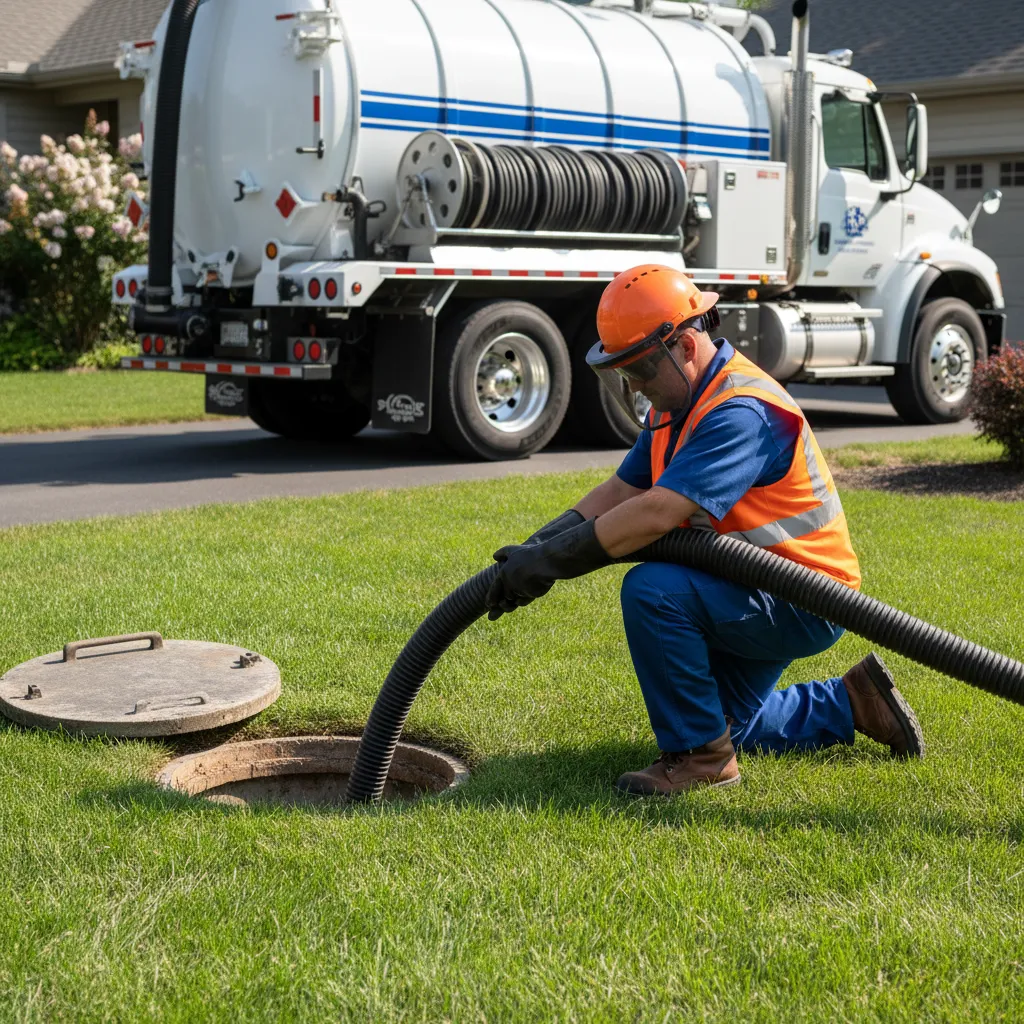
Signs You Need Residential Septic Tank Installation
Residential septic tank installation becomes necessary under several specific conditions. Recognizing these signs early saves you money, protects your groundwater, and keeps your property compliant with local sanitary codes. If you’re looking for help with plumbing or drains issues, our professionals can address any concerns.
You're building a new home without municipal sewer access:
Any residential property outside a public sewer service area requires its own onsite wastewater system. Your builder or general contractor will need a licensed septic installer to design and construct a code-compliant septic tank and soil absorption system before the home can receive an occupancy permit. We adhere to all management regulations and work with you on tailored plans for installing your new system.
Your existing cesspool or cesspit is failing:
Older properties sometimes rely on outdated cesspools that don’t treat effluent before it reaches the surrounding soil. A non-compliant cesspool that’s leaking untreated blackwater into the water table needs full replacement with a modern septic tank and engineered drain field. This situation can cause foul odors and pump failure, requiring emergency repairs to prevent environment contamination.
Persistent sewage backups and odorous conditions won't resolve:
When a septic system is backed up, clogged, or structurally corroded beyond repair, patching it rarely works. A corroded concrete tank with a collapsed baffle or a biomat-choked leach field often means the entire system needs replacement through a new residential septic tank installation. Built-up grease and solids in pipes can accelerate failure, so routine cleaning and maintenance are essential.
Your property failed a real estate transfer inspection:
Many counties require a septic inspection before a home sale closes. If the inspector finds a non-compliant, undersized, or dormant system, the transaction may stall until a new installation brings the property up to current health department standards.
You're adding bedrooms or expanding your home's footprint:
More bedrooms means a higher projected daily wastewater flow. Your existing tank may be too small. Local building codes often require a larger septic tank and expanded absorption bed to handle the increased influent volume from a home addition or renovation. Understanding these details helps you plan properly and avoid safety concerns down the road.
Our Residential Septic Tank Installation Process
Residential septic tank installation follows a structured sequence that protects your property and satisfies every regulatory requirement. Here’s how Lakes Region Septic completes the job from start to finish, with attention to details and customer care throughout the process.

Site survey and soil testing
We visit your property, evaluate the topography, and perform a perc test. We dig test pits to examine the soil profile, identify the clay layer or sand layer depth, and measure the distance to groundwater and bedrock.
System design and permitting
Based on soil test results, home size, and projected wastewater volume, we design the septic system layout. We prepare the site plan, calculate setbacks from your wellhead and property lines, and submit the permit application to the health department.
Excavation and tank placement
Our crew excavates the tank pit and drain field trenches using a backhoe or excavator. We set the precast concrete, fiberglass, or polyethylene tank at the correct depth and grade the base for stable, level placement.
Piping, connections, and drain field construction
We connect the inlet pipe from your home’s sewer line to the tank, install baffles and an effluent filter, and run the outlet pipe to the distribution box. We lay perforated lateral lines across gravel-filled trenches lined with geotextile fabric to form the leach field.
Backfill, grading, and final inspection
We backfill around the tank, compact the soil, install risers and access lids at grade, and schedule the health department inspection. Once the inspector certifies the system, we finish grading and resurface the disturbed area.
Brands We Use
Every product we install meets IAPMO, NSF, or ASTM standards.







All equipment is maintained on a strict schedule and calibrated for safe, sanitary operation.
Other Services
Residential septic tank installation
Septic tank install near me
Residential septic system contractor
Install septic tank for house
New septic tank installation
Home septic system installation
New septic system for home
Septic tank replacement residential
Home septic tank setup
Residential wastewater system install
Septic tank cost for house
Perc test and septic design
Drain field installation service
Soil test for septic system
Septic permit and inspection
FAQs About Residential Septic Tank Installation
What does residential septic tank installation include?
Residential septic tank installation includes the site survey, soil and perc testing, system design, permit acquisition, excavation, tank placement, piping connections, drain field construction, backfill, grading, and a final health department inspection. The full scope covers everything from the sewer line leaving your home to the last lateral line in the leach field. Our professionals handle all plumbing connections and pipes to ensure efficiency throughout the project.
How long does a new septic tank installation take?
Most residential septic tank installations take three to five days of active work once the permit is approved. Permit processing can add one to four weeks depending on your county health department’s schedule. Complex sites with mound systems or engineered designs may require additional time for proper completion.
When should I replace my septic system instead of repairing it?
A new residential septic tank installation makes more sense than repair when the tank is structurally corroded, the drain field is saturated with biomat, the system is undersized for your home, or the existing setup is non-compliant with current building codes. Repeated backups and contaminated groundwater near the leach field are strong indicators of failure that routine maintenance cannot address.
How much does it cost to install a residential septic tank?
Costs vary based on tank material, system type, soil conditions, and local permit fees. A conventional gravity-fed system with a concrete tank and gravel-filled trenches typically falls in a different price range than an advanced treatment unit with a pressurized drain field. We provide detailed written estimates after the site survey and perc test so you can expect transparent pricing tailored to your project.
Can I choose between concrete, fiberglass, and plastic tanks?
Yes. Each material has distinct advantages. Precast concrete tanks are heavy and durable. Fiberglass tanks resist corrosion and work well in high water table areas. Polyethylene tanks are lightweight and easier to transport to tight or remote sites. We’ll recommend the best option for your soil conditions and budget based on our expert knowledge.
Does the tank size depend on my home's square footage?
Tank sizing is based primarily on the number of bedrooms, which estimates daily wastewater flow. A three bedroom home typically requires a 1,000 gallon tank. Larger homes with more bathrooms and higher occupancy need proportionally larger tanks or dual chambered configurations.