
Commercial Septic Tank Installation
We provide professional commercial septic tank installation for businesses, municipalities, and multi-use properties across the Lakes Region – delivering reliable waste management solutions you can trust
Available 24/7 – Call Now for a Free Quote
Why Choose Lakes Region Septic?
Nationwide service coverage
Licensed and insured technicians
Same-day emergency service
Satisfaction guarantee on every job
5 Highlights of Commercial Septic Tank Installation
Engineered for High Capacity
Our commercial septic tank installation projects handle heavy wastewater volumes from restaurants, hotels, office parks, and municipal facilities. We size every concrete tank, fiberglass tank, or polyethylene tank to match your property’s daily flow demands, handling thousands of gallons of waste with ease.
Full Permitting and Compliance
We secure every septic permit, coordinate soil evaluations, and schedule perc tests with the local health department. We manage the paperwork to ensure a smooth approval process, so your commercial installation meets all setback requirements and regulatory standards before we break ground.
Advanced System Options
Lakes Region Septic installs conventional gravity-fed systems, pressurized mound systems, recirculating treatment units, and aerobic systems. We match the right configuration to your soil permeability and water table conditions, reducing chemical dependency through proper biological treatment.
Complete Site Work
Our crews excavate, trench, grade, and backfill using our own backhoes and excavators. We install distribution boxes, pump chambers, effluent filters, baffles, risers, and every lateral line your drain field requires. From start to finish, we handle every job including final plumbing connections.
Built to Last
Every commercial septic tank installation includes watertight seals, reinforced compartmentalized tanks, and alarm floats with control panels. We commission each system and verify proper function before final inspection, delivering lasting performance for decades.
Why Choose Our Commercial Septic Tank Installation
Commercial septic tank installation is a specialized discipline that demands licensed contractors with proven field experience and deep technical knowledge. Lakes Region Septic has built a reputation as the region’s most trusted installer for large-scale septic systems serving commercial and municipal properties, earning trust through demonstrated expertise.
Our team includes certified installers and engineers who design systems from the ground up. We perform on-site soil evaluations, run percolation tests, and calculate absorption area requirements before we ever mobilize equipment. This front-end precision addresses key site factors and prevents undersized or overloaded systems and costly issues down the road.
We own our fleet. Our backhoes, excavators, pump trucks, and vacuum trucks stay maintained and ready to respond to your request. That means fewer delays, tighter schedules, and lower costs passed on to you. We don’t subcontract the critical work and provide full support throughout your project.
Every commercial septic tank installation we complete carries our workmanship guarantee. We stand behind the tanks we set, the leach fields we build, and the connections we make. If something fails within our warranty period, we repair it at no charge.
Lakes Region Septic holds all required state and local licenses. We carry full liability coverage. Our installers receive ongoing training on advanced treatment units, drip irrigation systems, and recirculating tank configurations. You get a qualified, expert team that treats your project like the investment it is.
Signs You Need Commercial Septic Tank Installation
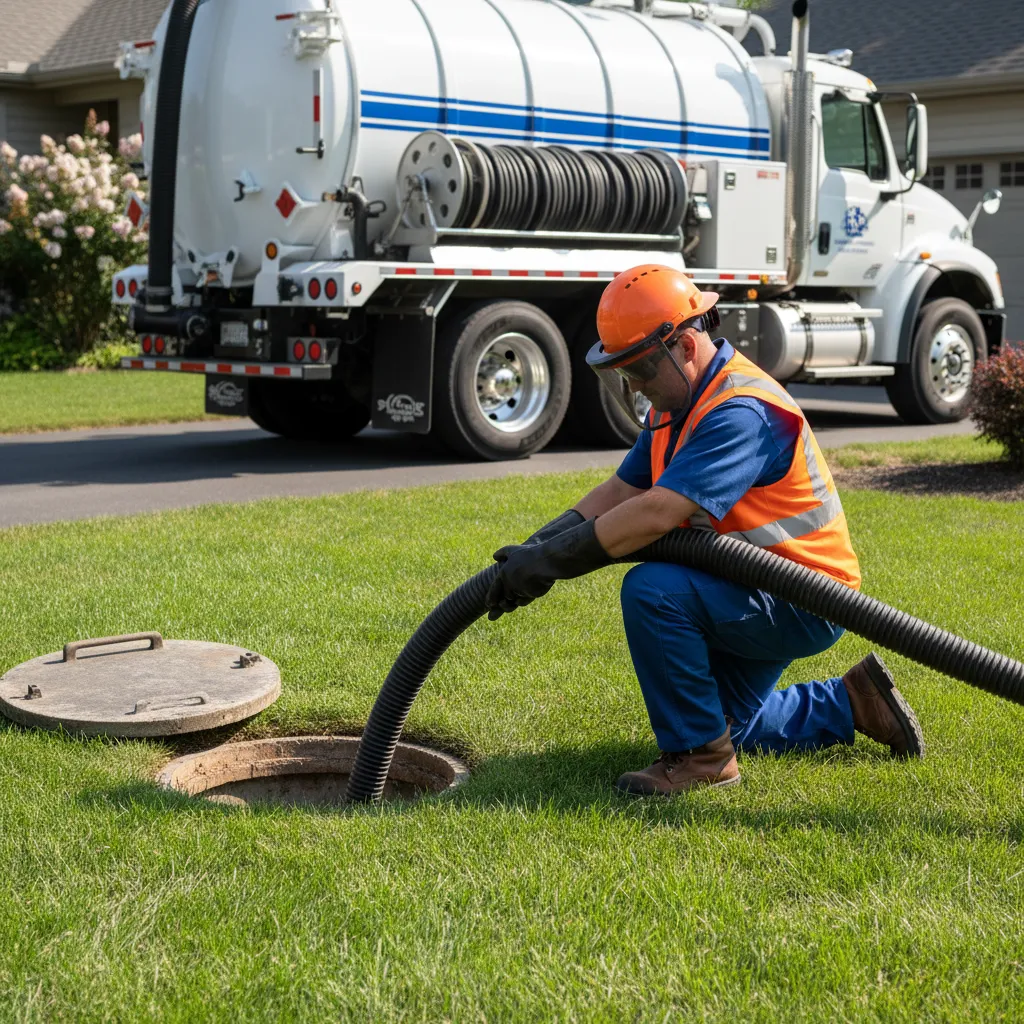
Commercial septic tank installation becomes necessary when specific conditions arise on your property. Recognizing these signs early saves money, reduces environmental impact, and prevents regulatory violations.
Your Business Is New Construction:
Any new commercial building without access to municipal sewer requires a dedicated septic system. The health department won’t issue an occupancy permit until a compliant septic tank, distribution box, and absorption bed are installed and commissioned. You need a perc test and soil evaluation completed before design work can begin.
Your Existing System Has Failed:
A failed or failing septic system shows clear symptoms. Saturated drain fields produce standing effluent at the surface. Clogged lateral lines back wastewater into the building. Biomat buildup chokes the gravel bed. When a system reaches this point, repair won’t restore function. A full commercial septic tank installation with a new tank, new leach field, and properly graded absorption area is the permanent fix.
You're Expanding Your Facility:
Adding square footage, restrooms, or kitchen capacity increases your wastewater volume. An undersized system can’t handle the additional influent. You’ll need a larger septic tank, expanded drain field, or a secondary pump chamber with a dosing pump to distribute effluent across a wider absorption area.
Your Property Is Converting Use:
A building that shifts from office space to a restaurant generates greywater and blackwater with higher grease and solids content. This change demands a grease trap, larger compartmentalized tank, and possibly an aerobic treatment unit. The health department will require a new septic permit for the converted use.
Your Cesspool or Holding Tank Is Non-Compliant:
Older commercial properties sometimes operate on cesspools or holding tanks that no longer meet code. Decommissioning the old system and installing a modern commercial septic system with effluent filters, risers, and inspection ports brings your property into full compliance.
Our Commercial Septic Tank Installation Process
Commercial septic tank installation follows a defined sequence that protects your investment and satisfies every regulatory requirement.

Site Assessment and Soil Evaluation
Our engineer visits your property to evaluate topography, soil permeability, water table depth, and available setbacks. We dig test pits and run perc tests to determine how quickly the soil absorbs effluent. These results drive the entire system design.
System Design and Permitting
We design your commercial septic system based on projected daily wastewater flow, soil conditions, and local code. We select tank size, drain field dimensions, and component specifications. We then submit plans to the health department and secure your septic permit.
Excavation and Site Preparation
Our crews mobilize backhoes and excavators to dig the tank pit, trench lateral lines, and grade the absorption area. We establish proper slope for gravity-fed systems or prepare the pump chamber location for pressurized configurations.
Tank Setting and Component Installation
We set the precast concrete tank, fiberglass tank, or polyethylene tank into the prepared pit. We install inlet pipes, outlet pipes, baffles, effluent filters, risers, and access ports. Distribution boxes, dosing chambers, and control panels go in next.
Drain Field Construction
We lay perforated drainpipe across the gravel bed in measured lateral lines. Each leach line connects to the header pipe through tee fittings. We verify grade and spacing before covering the field.
Backfill, Connection, and Commissioning
We backfill around the tank and over the drain field with approved material. We connect the building’s sewer line to the septic tank inlet. We fill the tank, test every pump and alarm float, and commission the system. A final inspection with the health department certifies your installation as compliant and operational.
Brands We Use
Lakes Region Septic installs products from these trusted manufacturers:







Quality components mean fewer service calls and longer system life.
Other Services
Commercial septic tank installation
Commercial septic installation service
Install commercial septic tank
Commercial septic contractor
Commercial septic system design and install
Commercial septic system installation
Business septic tank setup
Commercial wastewater system installation
Septic system installer near me
New commercial septic tank
Septic tank installer for businesses
Large capacity septic system contractor
Drain field installation for commercial property
Perc test and septic permit for commercial
Leach field construction commercial grade
FAQs About Commercial Septic Tank Installation
What is commercial septic tank installation?
Commercial septic tank installation is the complete process of designing, permitting, excavating, and installing a septic system for a commercial property. It includes setting the tank, building the drain field or leach field, installing distribution boxes and pump chambers, and commissioning the finished system. Commercial systems are larger and more complex than residential ones because they process higher volumes of wastewater from businesses, restaurants, and multi-tenant buildings.
How long does a commercial septic tank installation take?
Most commercial septic tank installations take between two and four weeks from excavation to final inspection. The timeline depends on system size, soil conditions, weather, and permitting speed. A straightforward gravity-fed system on permeable soil installs faster than a pressurized mound system on a challenging site. Design and permitting can add several weeks before fieldwork begins.
When should a business replace its septic system instead of repairing it?
A business should consider full commercial septic tank installation when the existing system shows repeated failures, the drain field is saturated beyond recovery, or the tank is cracked and no longer watertight. Non-compliant cesspools and undersized holding tanks also warrant replacement. If repair costs approach 50% of a new installation, replacement is the better investment.
How much does commercial septic tank installation cost?
Costs vary based on tank size, system type, soil conditions, and local permitting fees. A standard commercial septic tank installation can range from $15,000 to $75,000 or more for advanced treatment systems. Lakes Region Septic provides detailed estimates after completing the site assessment and soil evaluation.
Does a commercial septic tank installation require a permit?
Every commercial septic tank installation requires a septic permit from the local health department. The permit process includes a soil evaluation, perc test, engineered system design, and plan review. Lakes Region Septic manages the entire permitting process so your project stays on schedule and fully compliant.