
Septic Tank Repair
Professional septic tank repair services that restore your system’s function and protect your property from costly wastewater and sewer system failures. As a reliable septic company, we specialize in identifying and resolving issues with your plumbing system, providing high-quality service and long-term solutions for residential and commercial customers.
Available 24/7 – Call Now for a Free Quote
Why Choose Lakes Region Septic?
Nationwide service coverage
Licensed and insured technicians
Same-day emergency service
Satisfaction guarantee on every job
5 Highlights on Septic Tank Repair
Cracked Tank Restoration
Our certified and trained technicians repair cracked concrete, fiberglass, and polyethylene septic tanks using professional grade sealants and reline methods that restore watertight integrity to deteriorated tank walls and compartments. We handle everything from minor cracks to major structural issues.
Baffle Replacement and Repair
Damaged inlet baffles and outlet baffles cause raw sewage to flow directly into your drain field or sewer line. We replace corroded and collapsed baffles to keep sludge and scum properly separated from effluent, providing reliable solutions that protect your plumbing systems.
Riser and Access Lid Repair
Broken septic riser lids and manhole covers let groundwater infiltrate your tank and create hazardous openings on your property. We patch, reseal, and replace faulty access components with same-day service to keep your system protected.
Leak Detection and Sealing
Leaky tanks lose effluent into surrounding soil and contaminate the water table and water line connections. Our team uses inspection cameras and probe rods to identify and locate fractures, then reseals joints, fittings, and pipe penetrations along every line.
Emergency Response
Backed up sewage and overflowing tanks demand immediate attention. Lakes Region Septic dispatches pump trucks and qualified repair crews for emergency septic tank repair around the clock. We are ready to serve you with no-pressure service when you need us most.
Our Septic Tank Repair Services:
Why Choose Our Septic Tank Repair
Septic tank repair is a specialized trade that requires licensed contractors, proper equipment, and direct experience with subsurface wastewater and sewer systems. Lakes Region Septic brings all three to every job as a trusted plumbing company known for professionalism and customer service.
Our technicians hold current certifications and comply with local health department regulations for all septic system work. We are fully licensed and insured, carry full liability coverage, and pull the required permits before breaking ground. That protects you and ensures clear communication throughout every project.
We’ve repaired conventional concrete tanks, alternative aerobic treatment units, chambered systems, and aging cesspools across the Lakes Region. Each repair starts with a thorough camera inspection and system evaluation so we assess and diagnose the actual problem — not just the symptom. You get a written scope of work and a free estimate before we begin.
Our repair crews operate their own vacuum trucks, excavators, backhoes, and hydro jetters. We don’t subcontract the heavy lifting. That means faster scheduling, tighter quality control, and one point of contact from start to finish. As an owner-operated company, we take pride in working directly with each customer.
We stand behind every septic tank repair with a written workmanship guarantee. If a joint we sealed leaks or a baffle we installed fails within the warranty period, we come back and fix it at no charge. We highly recommend regular maintenance to prevent future issues. Lakes Region Septic is the trusted, top rated septic contractor homeowners and property owners call when their system breaks down. Check out any customer review and you’ll see why customers continue to recommend our plumbing services.
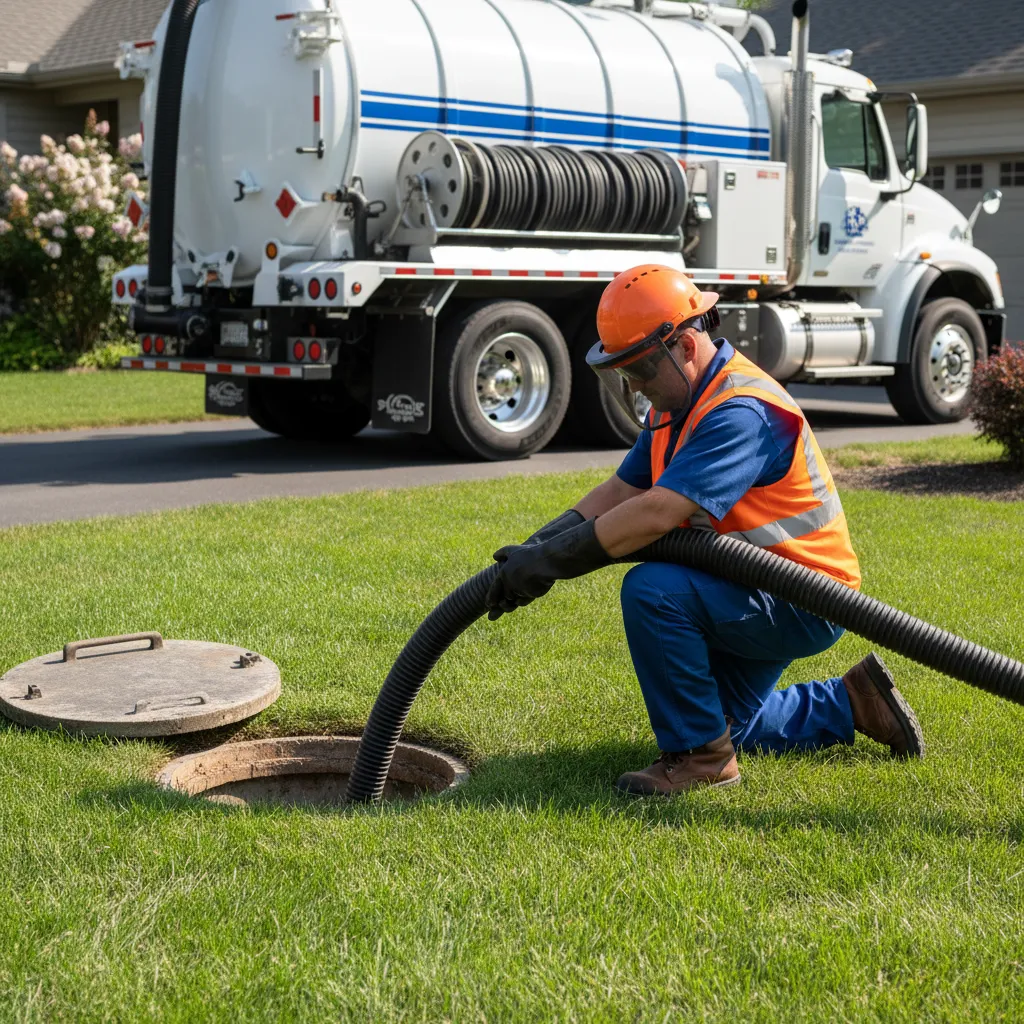
Signs You Need Septic Tank Repair
Septic tank repair is something most homeowners don’t think about until a clear warning sign appears. Recognizing these signs early saves you money and prevents contaminated wastewater from reaching your yard, your well, or your drain field. Our trained plumbers can help you identify any issue before it becomes a major problem.
Sewage Odors Near the Tank or Cleanouts:
Foul, persistent odors around your septic tank lid, cleanout pipes, or inspection ports signal that gases are escaping through cracked walls, a deteriorated riser seal, or a faulty manhole cover. A watertight tank should contain all odorous gases and vent them through your home’s plumbing stack. If you smell raw sewage or sewer odors outside, the tank structure itself likely needs repair. Request a service call to address this issue promptly.
Wet or Spongy Ground Over the Tank:
Saturated soil directly above your septic tank — separate from the drain field area — points to a leaky tank body or a failed pipe connection at the inlet or outlet line. Effluent seeping upward through backfill means the tank has lost its structural seal. Left unaddressed, this contaminates surrounding soil and can raise your local water table with untreated wastewater. We provide fast line installation and repair services to address these plumbing needs.
Slow Drains Throughout the House:
When every fixture in your home drains slowly at the same time, the problem usually sits at the tank, not in individual drain lines. A collapsed baffle, a blocked or clogged effluent filter, or a cracked outlet tee can restrict flow and cause sewage to back up into your lowest fixtures. A clog in the main sewer line can also cause similar symptoms.
Alarm Activation on Pump Systems:
If your dosing chamber or lift station alarm sounds repeatedly, the float switch, effluent pump, or pump chamber may need repair. Malfunctioning pump components prevent effluent from reaching the drain field and cause the tank to overfill. Our plumber team can assess and diagnose these issues quickly.
Visible Cracks or Settling at the Tank Lid:
A tank lid that has shifted, dropped, or shows visible fractures indicates structural movement below grade. Precast concrete tanks settle over time, and that settling cracks joints, separates compartments, and breaks pipe connections. A professional inspection with a camera confirms the extent of damage and guides the repair plan. Contact our plumbing service for an estimate.
Our Septic Tank Repair Process
Septic tank repair is a methodical process. We follow the same proven sequence on every job to make sure the root cause gets fixed — not just patched over. Our trained technicians are ready to handle any repair with professionalism.

System Location and Access
We locate your septic tank using probe rods, electronic locators, and as-built records. If risers aren’t present, we excavate down to the access lids and expose the tank for inspection. Our plumbers serve customers throughout the region with prompt response times.
Pump Out and Cleaning
Our vacuum truck pumps out all sludge, scum, and standing effluent. A clean, empty tank lets us see every wall, joint, baffle, and fitting clearly. We can’t diagnose what we can’t see, and working with an empty tank ensures accurate results.
Camera Inspection and Assessment
A technician lowers an inspection camera into the tank and documents cracks, corrosion, root intrusion, baffle damage, and pipe failures. We also check the inlet and outlet lines, the distribution box connection, and any tees or couplings. This evaluation helps us identify all issues accurately.
Repair Execution
Based on the assessment, we perform the specific repair: resealing cracked joints, replacing corroded baffles, relining damaged walls, patching fractures, completing new installation of risers, or replacing failed effluent filters and float switches. We use manufacturer-specified materials matched to your tank type for reliable results.
Backfill, Testing, and Certification
We fill the tank with water to verify watertight integrity, backfill the excavation, and grade the surface. You receive a completed inspection report and any documentation your health department requires for permit compliance. We also provide information on water heater, tankless water heater, and hot water system connections if applicable to your plumbing system.
Brands We Use
Lakes Region Septic installs products from these trusted manufacturers:







Every product we install meets or exceeds NSF and IAPMO standards.
Other Services
Septic tank repair
Septic tank repair service
Septic tank repair near me
Emergency septic tank repair
Professional septic tank repair
Sewer line repair
Gas line installation
Fix septic tank
Septic system repair
Residential septic repair
Septic tank restoration
Septic tank crack repair
Clogged drain repair
Tankless water heaterauling and disposal
Cracked septic tank sealing
Baffle replacement septic
Leaky septic tank fix
Corroded septic tank relining
Septic tank structural repair
Water line installation
High-quality plumbing service
FAQs About Septic Tank Repair
What does septic tank repair involve?
Septic tank repair is the process of fixing structural or mechanical failures in your tank and its components. Common repairs include sealing cracked walls, replacing broken inlet or outlet baffles, installing new effluent filters, repairing pipe and gas line connections, and replacing corroded risers or access lids. The specific work depends on what the camera inspection reveals. Our company can also assist with water heater and hot water system connections as part of your overall plumbing needs.
When should I schedule a septic tank repair?
Schedule a repair as soon as you notice warning signs: sewage or sewer odors near the tank, wet ground over the burial site, slow drains in multiple fixtures, repeated pump alarms, or visible damage at the tank lid. Delaying a repair lets a small crack become a collapsed wall and turns a simple fix into a full tank replacement. Request a free estimate today.
Why do septic tanks crack or fail?
Concrete tanks crack from soil settlement, hydrostatic pressure, tree root intrusion, and natural deterioration over 20 to 30 years. Fiberglass and polyethylene tanks can buckle under improper backfill loads. Baffles corrode from constant exposure to hydrogen sulfide gas. Pipe joints and gas line installation points can separate when the ground shifts seasonally. These are common issues we handle regularly.
How long does a septic tank repair take?
Most repairs take one day. A straightforward baffle replacement or joint reseal can be finished in a few hours once the tank is pumped and excavated. More extensive work — like relining a tank interior or replacing multiple components — may require two days. Our heater and water line repairs can typically be completed same day as well.
Can a failing septic tank be repaired, or does it need replacement?
Many failing tanks can be repaired if the structural damage is localized. Cracks, joint separations, and component failures respond well to professional repair. A tank with widespread collapse, severe corrosion across multiple walls, or a compromised foundation typically needs full replacement. Our assessment tells you exactly which option makes sense for your system and your budget. We specialize in providing long-term solutions that address your plumbing system needs.
Does septic tank repair require a permit?
Most municipalities and health departments require a permit for septic tank repair work that involves excavation or structural modification. Lakes Region Septic handles the permit application and scheduling of any required inspections so your repair stays fully compliant. Our team is known for excellent customer service and clear communication throughout the permitting process.