
Septic Baffle & Component Repair
Professional baffle and component repair services that restore your septic system’s function and extend its longevity – expert solutions that protect your investment
Available 24/7 – Call Now for a Free Quote
Why Choose Lakes Region Septic?
Nationwide service coverage
Licensed and insured technicians
Same-day emergency service
Satisfaction guarantee on every job
5 Highlights on Septic Baffle & Component Repair
Inlet and outlet baffle restoration
We repair cracked, corroded, and collapsed baffles that allow scum and sludge to escape your septic tank. Our crew installs PVC tee baffles and reinforced wall baffles that meet current code requirements and prevent solids from reaching your drain field, helping prevent future damage to your sewer line and entire system.
Effluent filter replacement and cleaning
A clogged or failed effluent filter lets suspended solids and debris pass into your distribution box and lateral lines. Our cleaning services include filter maintenance where we clean, repair, or replace filters during every baffle service call to protect your leach field from premature biomat buildup.
Tank component diagnostics with camera inspection
Our certified technicians use inline camera inspection and probe tools to assess baffle condition, dividing wall integrity, and compartment function without unnecessary excavation. We locate deteriorated components before they cause a full system backup.
Riser, lid, and access cover repair
Cracked riser lids and damaged access covers let groundwater infiltrate your tank, create leaks, and dilute the clarified zone. We handle seal repairs, patch work, and replace risers and covers using gaskets and couplings rated for subsurface conditions with minimal disruption to your property.
Distribution box and outlet pipe repair
A shifted or corroded distribution box sends uneven effluent flow to your leach lines, reducing system efficiency. Our line repair services include leveling, resealing, and reconnecting distribution boxes and outlet pipes to restore balanced pressure across your entire septic field.
Why Choose Our Septic Baffle & Component Repair
Septic baffle and component repair is a specialized service that demands hands-on experience and expert knowledge with every tank configuration in the Lakes Region. Our licensed septic contractors provide comprehensive services and plumbing services, having repaired baffles and internal components in precast concrete tanks, fiberglass units, and polyethylene holding tanks across residential and commercial properties for years.
We carry a full inventory of tee baffles, wall baffles, effluent filters, gaskets, PVC couplings, and riser assemblies on every truck. That means same day repairs in most cases with reliable service you can schedule around your needs. No waiting on parts. No return trips on your dime.
Our technicians hold current certifications and coordinate directly with the local health department when permit requirements apply. Every repair meets or exceeds code compliance standards for your municipality. Our inspection services include advanced testing, and we document each job with photos, measurements, and as-built notes so you have a clear record for future inspections or property transfers.
Lakes Region Septic stands behind every baffle and component repair with a written workmanship guarantee. If a repaired baffle fails within our warranty period, we come back and fix it at no charge. Our company diagnoses the actual problem, explains your options in plain language, and never recommends work you don’t need. Contact us for a free quote and experience our top-notch service. That’s why homeowners and commercial property managers across the Lakes Region trust us as their top-rated septic repair team.
Signs You Need Septic Baffle & Component Repair
Septic baffle and component failure doesn’t always announce itself with a dramatic backup. The warning signs often build gradually, and learning to identify these issues early saves you thousands in costs for drain field remediation or full tank replacement.
Slow drains throughout the house:
When your outlet baffle corrodes or collapses, solids migrate into the outlet pipe and distribution box. This restricts effluent flow and causes wastewater to back up through your lowest fixtures, creating running issues with your line. If every drain in your home runs sluggish at the same time, a failed baffle is a likely culprit and your plumbing needs immediate attention.
Sewage odor near the tank or yard:
A deteriorated inlet baffle lets gases escape through the inlet pipe and back toward your home’s plumbing stack and sewer connection. You might also smell rotten, odorous air near your riser lids if the gasket seal has cracked or the access cover has shifted. These odors signal that anaerobic gases are venting where they shouldn’t, and leak detection may be needed.
Standing water or saturated soil over the drain field:
When a broken outlet baffle allows scum and sludge into your leach lines, the perforated drainpipe openings clog with biomat and grease. Effluent can’t percolate into the soil. Instead, it seeps to the surface and saturates the ground above your absorption bed. You’ll need professional help to solve this sewer system problem.
Alarm activation on your pump chamber:
A failed effluent filter or collapsed baffle can send heavy solids into the dosing chamber, fouling the submersible pump and triggering the float switch alarm. Repeated alarm events point to an upstream component problem inside the septic tank itself and may require emergency service. We can help monitor your system to prevent recurrence.
Visible damage during routine pumping:
Your pumper may report a missing tee baffle, a cracked dividing wall between compartments, or corroded reinforcement bar exposed on the tank wall. These findings during a standard pump out provide clear evidence that baffle and component repair is overdue and warrant a full evaluation of your system.
Our Septic Baffle & Component Repair Process
Septic baffle and component repair follows a structured sequence that protects your system and your property. Here’s how our trained technicians handle every job from start to finish.

Locate and access the tank
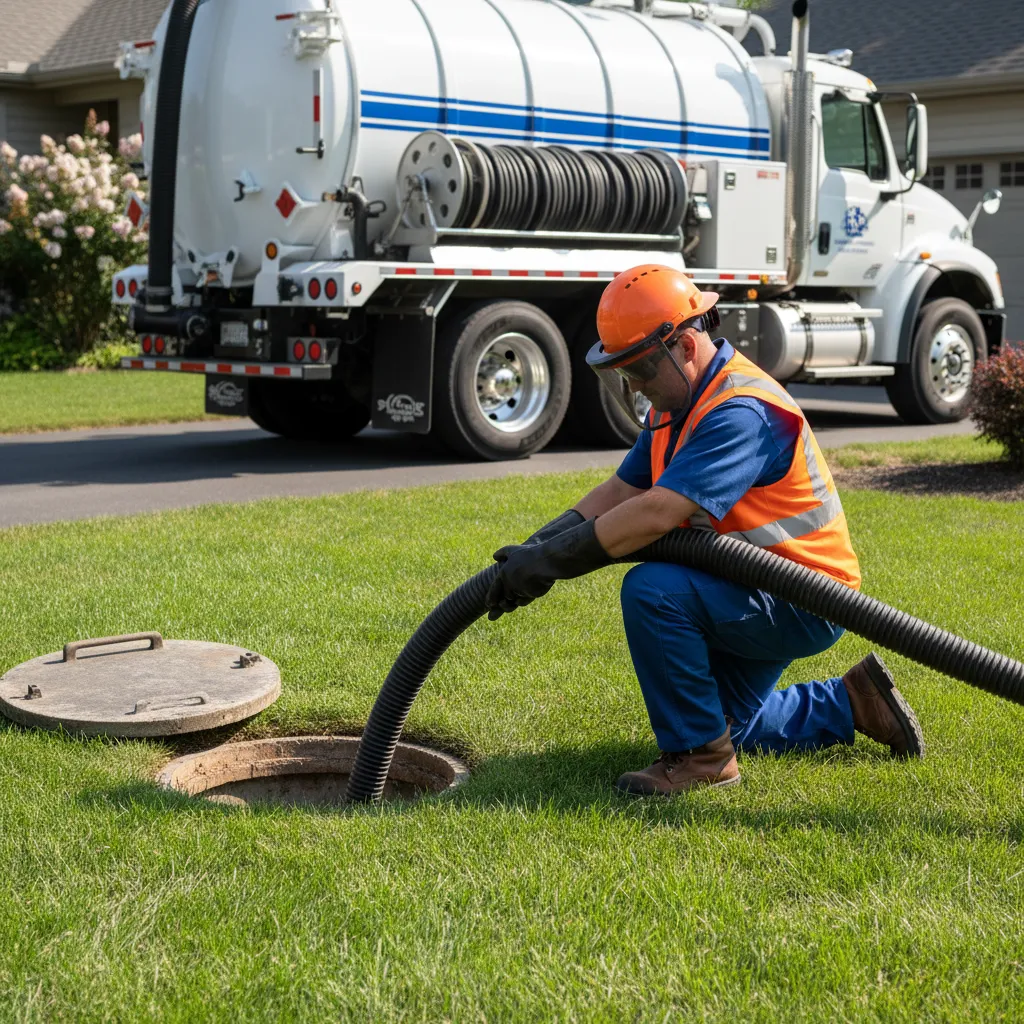
We use electronic locator technology and probe rods to find buried tanks, then excavate to expose the riser lids or access covers with landscaping protection in mind. If risers aren’t installed, we recommend adding them during the repair visit.
Pump and inspect.
We pump the tank with our vacuum truck to remove sludge, scum, and standing effluent. With the tank empty, our technician performs a thorough camera inspection of both compartments, all baffles, the dividing wall, inlet pipe, outlet pipe, water line connections, and effluent filter housing.
Diagnose and document
We photograph every deficiency and assess the structural condition of each component. You receive a clear explanation of what failed, why it failed, and what the repair involves.
Repair or replace components
We install new PVC tee baffles, replace corroded wall baffles, seal cracked gaskets, patch minor tank wall damage, and fit new effluent filters. Line replacement and all couplings and connections get tested for a watertight seal before we finish.
Backfill and reinstate
We compact backfill material around risers, reinstall access covers, and grade the surface to direct water away from the tank. You get a written report with photos, part specifications, and maintenance recommendations.
Brands We Use
Lakes Region Septic installs products from these trusted manufacturers:









We stock genuine replacement parts from each manufacturer.
Other Services
Septic baffle repair
Septic component repair
Inlet baffle repair
Effluent filter replacement
Septic tank internal repair
Septic tank baffle replacement
Septic system component replacement
Inlet baffle replacement service
Septic effluent filter cleaning
Septic tank structural repair
Tee baffle installation septic
Outlet baffle corroded fix
Septic tank inlet pipe repair
Clogged effluent filter septic tank
Dividing wall crack septic repair
FAQs About Septic Baffle & Component Repair
What is a septic baffle, and what does it do?
A septic baffle is a component inside your tank that directs wastewater flow and prevents scum and sludge from exiting, eliminating the need for costly sewer repair or water line repair. The inlet baffle slows incoming influent so solids settle in the first compartment. The outlet baffle holds back the scum layer and only allows clarified effluent to pass into the outlet pipe and on to your drain field.
When should I have my baffles inspected?
You should schedule baffle inspections every time your tank gets pumped, which is typically every three to five years. Concrete baffles corrode faster than PVC tee baffles, so older tanks with original concrete baffles may need inspection more frequently.
Why do septic baffles fail?
Baffles deteriorate from constant exposure to hydrogen sulfide gas and acidic wastewater. Concrete baffles corrode and crumble over time. PVC baffles can crack from ground pressure or improper installation. Tree roots and invasive roots intrusion, along with physical damage during careless pumping, also cause baffle failure.
How long does a baffle repair take?
Baffle and component repairs take two to four hours once the tank is pumped and accessible. If we need to excavate to reach a tank without risers, add another one to two hours for digging and backfill work.
Can a broken baffle damage my drain field?
Yes. A failed outlet baffle is one of the most common causes of premature drain field failure. Without a functioning baffle, solids and grease flow directly into your distribution box and leach lines, where they clog the perforated pipe and build up a thick biomat layer that blocks percolation into the surrounding soil. This can lead to complex sewer repair or even water line replacement needs.
Does my town require a permit for baffle repair?
Permit requirements vary by municipality. Some towns classify baffle replacement as routine maintenance that doesn’t need a permit. Others require a septic permit for any internal tank work. Lakes Region Septic checks with your local health department and handles permit paperwork when required. In some cases, we may utilize trenchless technology for repairs that involve trenchless methods to minimize yard disruption.