Drain Field Services
Professional drain field services to keep your soil absorption system functioning at peak performance. Our experienced team delivers long-lasting solutions and drain cleaning services for septic tanks across the Lakes Region and nationwide.
Available 24/7 – Call Now for a Free Quote
Why Choose Lakes Region Septic?
Nationwide service coverage
Licensed and insured technicians
Same-day emergency service
Satisfaction guarantee on every job
5 Highlights on Drain Field Services
Expert Drain Field Inspections
Our qualified septic inspectors evaluate lateral lines, distribution boxes, and gravel beds to identify hydraulic failure, biomat buildup, and saturated soil conditions before they cause surfacing or breakout in your yard.
Full Drain Field Repair and Replacement
We excavate failing perforated pipes, replace clogged aggregate, and install new geotextile fabric to restore proper effluent dispersal throughout your soil absorption system.
Advanced Drain Field Rejuvenation
Our technicians aerate compacted soils, backflush blocked lateral lines, and remediate biofilm accumulation to extend the functional life of your leach field without full replacement.
Precise Percolation Testing and Soil Analysis
We conduct perc rate evaluations and soil profile assessments to determine the best drain field configuration for residential and commercial properties, whether conventional, mounded, or alternative systems.
Permit Coordination and Compliance
Lakes Region Septic works directly with your local health department to secure permits, meet setback requirements, and file accurate as-built drawings for every drain field installation or repair project.
Our Septic Tank Pumping Services:
Why Choose Our Drain Field Services
Drain field services are the core of what we do at Lakes Region Septic. With decades of experience, we’ve built our reputation on accurate diagnostics, quality materials, and installations that pass inspection the first time. Our septic installers hold current certifications and train on conventional, mounded, elevated, and alternative drain field systems. That range of expertise means we match the right solution to your soil type, whether it’s sandy, loamy, or clayey.
We stand behind every drain field project with a written workmanship guarantee. Our crews grade trenches to exact specifications, verify trench depth and trench width against your site plan, and confirm proper hydraulic load capacity before backfilling. We don’t cut corners on aggregate, filter fabric, or pipe quality.
Lakes Region Septic also provides transparent pricing. Contact us for a free estimate on any project. You’ll receive a detailed scope of work before we break ground, covering everything from excavation to vegetation cover restoration. No surprise charges. No vague estimates.
Our maintenance contracts give you scheduled drain field inspections, effluent filter cleaning, tank maintenance, and distribution box checks at regular intervals. Catching a problem early – like root intrusion or a failing float switch – saves thousands compared to a full drain field replacement. We offer long-term plumbing services and treat every property like our own, and our repeat customers across the Lakes Region prove that approach works.
Signs You Need Drain Field Services
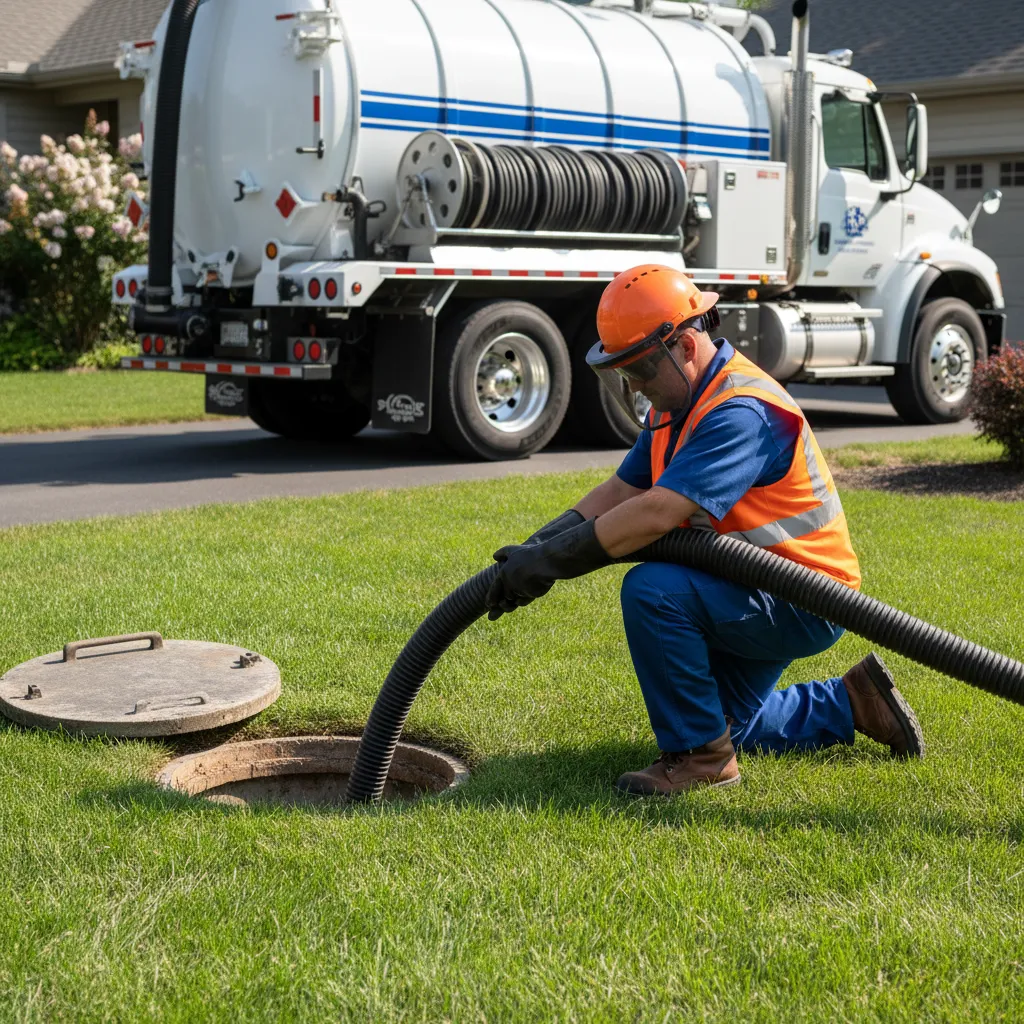
Drain field problems rarely appear overnight. They develop gradually, and recognizing the warning signs early can save you from a costly full system replacement or emergency service call. Here are five indicators that your drain field needs professional attention.
Wet or Spongy Ground Over the Leach Field:
Ponding or surfacing above your lateral lines – especially after rain events – signals that effluent isn’t percolating into the soil properly. Saturated conditions often point to a clogged biomat layer, compacted gravel bed, hydraulic overload, or leaks in the system. This standing water contains pathogens and coliform bacteria, making it a direct health risk.
Slow Drains and Backed Up Fixtures:
When kitchen sinks, bathroom sinks, toilets, and showers throughout your plumbing system drain sluggishly at the same time, the issue likely sits downstream in your drain field rather than in a single drainpipe. A blocked distribution box or overloaded lateral lines can cause wastewater to back up into your pump chamber and eventually into the house.
Foul Odors Near the Drain Field Area:
Odorous conditions around your yard, especially near the septic tank or leach field, indicate that anaerobic decomposition is occurring at or near the surface. Effluent that should seep deep into subsurface soils is instead reaching grade level.
Unusually Lush or Green Grass Strips:
Vegetation growing noticeably faster or greener directly over your trench lines means excess nutrients from effluent, particularly nitrate and phosphorus, are concentrating near the surface instead of filtering through the soil profile as designed.
Septic Alarm Activation or High Tank Levels:
A triggered alarm or a pump chamber that won’t drain down suggests your drain field can’t absorb the hydraulic load your household generates. The effluent has nowhere to go, so it accumulates. This failing condition demands immediate emergency drain field service.
Our Drain Field Services Process
Drain field service at Lakes Region Septic follows a structured, repeatable process that delivers reliable results on every job.

Site Assessment and Records Review
We start by reviewing your as-built drawing, site plan, and permit history. Our inspector locates the septic tank, distribution box, and lateral lines using electronic locating equipment and inspection ports.
System Diagnostics
We open the distribution box and inspect each lateral line for equal flow. We check effluent levels in the septic tank, examine the effluent screen, and probe the drain field for saturated or ponding conditions. A percolation test may follow if soil absorption rates are in question.
Problem Identification and Scope of Work
Based on diagnostics, we identify the root cause. That could be biomat accumulation, root intrusion, a cracked distribution box, compacted soil, or a structural failure in the perforated pipe. We present findings and a written scope of work with clear pricing.
Repair, Rejuvenation, or Replacement
Our crew executes the approved plan. We excavate trenches, replace failed components, install new aggregate and geotextile fabric, backflush lines, or aerate compacted soils depending on the diagnosis. Every repair meets local health department standards.
Backfill, Grading, and Final Inspection
We backfill with approved material, restore proper grade, and apply topsoil and seed for vegetation cover. A final inspection confirms the drain field operates within designed capacity and gallons per day specifications.
Brands We Use
Drain field services demand components that perform underground for decades. We use only long-lasting, quality-tested products.





Every product we install carries manufacturer specifications for load rating, material composition, and expected service life.
Other Services
Drain field services
Drain field repair
Drain field installation
Drain field inspection
Drain field replacement
Septic tank pumping
Leach field services
Leach field repair
Absorption field installation
Septic drain field evaluation
Failing drain field remediation
Grease trap services
Soil absorption system repair
Lateral line replacement
Perforated pipe and gravel bed install
Distribution box and effluent flow check
Septic system hydraulic failure restoration
Emergency septic services
FAQs About Drain Field Services
What is a drain field and what does it do?
A drain field is the subsurface component of your septic system where effluent from septic tanks disperses into the soil for final treatment. This system is distinct from municipal sewer line connections. Perforated pipes laid in gravel-filled trenches distribute wastewater across a designated absorption area. Soil microorganisms then decompose organic matter, filter suspended solids, and denitrify the effluent before it reaches the water table.
When should I schedule a drain field inspection?
Schedule a professional drain field inspection every one to three years, or immediately if you notice ponding, slow drains, odorous conditions, or alarm activation. Septic Tank Pumping should also be scheduled regularly alongside inspections. Catching problems at the biomat or distribution box stage prevents full system failure.
Why do drain fields fail?
Drain fields fail for several reasons: hydraulic overload from excessive water use, compacted or clayey soils that won’t percolate, root intrusion into lateral lines, a clogged effluent filter, grease buildup from improper disposal, or a crushed distribution box. Lack of regular septic tank pumping accelerates failure. Age also plays a role. Conventional systems installed decades ago may simply reach the end of their functional life. Regular cleaning services help extend system longevity.
How long does a drain field replacement take?
Most residential drain field replacements take two to five days depending on soil conditions, system type, and permit requirements. Mounded or alternative systems may require additional time for grading and pressure distribution network installation.
Can a failing drain field be repaired instead of replaced?
Yes, in many cases. Our technicians can rejuvenate a drain field by aerating compacted soil, backflushing blocked lateral lines, or replacing a single failed component like the distribution box or effluent screen. In some situations, tank replacement may be necessary as part of a comprehensive plumbing service. A thorough inspection determines whether repair or full replacement is the best path forward.
Does Lakes Region Septic handle drain field permits?
We coordinate directly with your local health department to secure all required permits, schedule inspections, and submit as-built drawings upon project completion. Our policy is to handle all regulatory requirements on your behalf. You won’t need to navigate the permitting process on your own.