
Septic Tank Pumping
Professional septic tank pumping keeps your system running clean, efficient, and code compliant year after year. Lakes Region Septic is your go-to team for providing reliable septic services that help you maintain a healthy plumbing system.
Available 24/7 – Call Now for a Free Quote
Why Choose Lakes Region Septic?
Nationwide service coverage
Licensed and insured technicians
Same-day emergency service
Satisfaction guarantee on every job
5 Highlights on Septic Tank Pumping
Complete tank evacuation
Our trained team operates vacuum trucks that suction all sludge, scum, and effluent from your septic tank, leaving the chamber clean and ready to process wastewater again. We handle residential and commercial tanks of every size.
Drain field protection
Routine maintenance through septic tank pumping prevents solids from migrating past the baffle and into your leach field. A neglected absorption trench can clog and costs thousands to replace. Pumping on schedule means you never worry about that.
Accurate sludge measurement
Our septic technicians measure the sludge layer and scum layer before every pump out. These readings provide the information you need to understand exactly how your system is performing and when to expect your next service.
Proper septage disposal
We haul all septage to licensed treatment facilities, following every health department regulation for transport and discharge. Before we finish and leave your site, you get a signed manifest documenting legal disposal.
Full system inspection included
Every pumping appointment includes thorough inspections of your baffles, inlet pipe, outlet pipe, effluent filter, and access lids. We catch corroded or leaky components and other issues before they become emergency situations.
Our Septic Tank Pumping Services:
Why Choose Our Septic Tank Pumping
Septic tank pumping is the single most effective way to extend the life of your entire septic system. Lakes Region Septic has pumped thousands of tanks across the region, and we bring that experience to every job.
Our fleet includes late model vacuum trucks equipped with high capacity suction hoses that can reach deep or hard to access tanks. We carry multiple hose lengths and fittings so buried risers, offset manholes, and tight lot lines never slow us down. Every truck operator holds current certification and follows strict safety protocols around open tanks and sewage exposure.
We schedule appointments within a tight window and show up on time. Our technicians walk you through what they find inside the tank – sludge depth, scum thickness, baffle condition, and any signs of backflow or overflow. You get a written report with recommendations, not a vague summary.
Lakes Region Septic stands behind every pump out with a satisfaction guarantee. If something isn’t right, we come back. We also offer scheduled maintenance plans that remind you when your next septic tank pumping is due so you never fall behind. Preventive pumping saves money. We make it easy to stay on track.
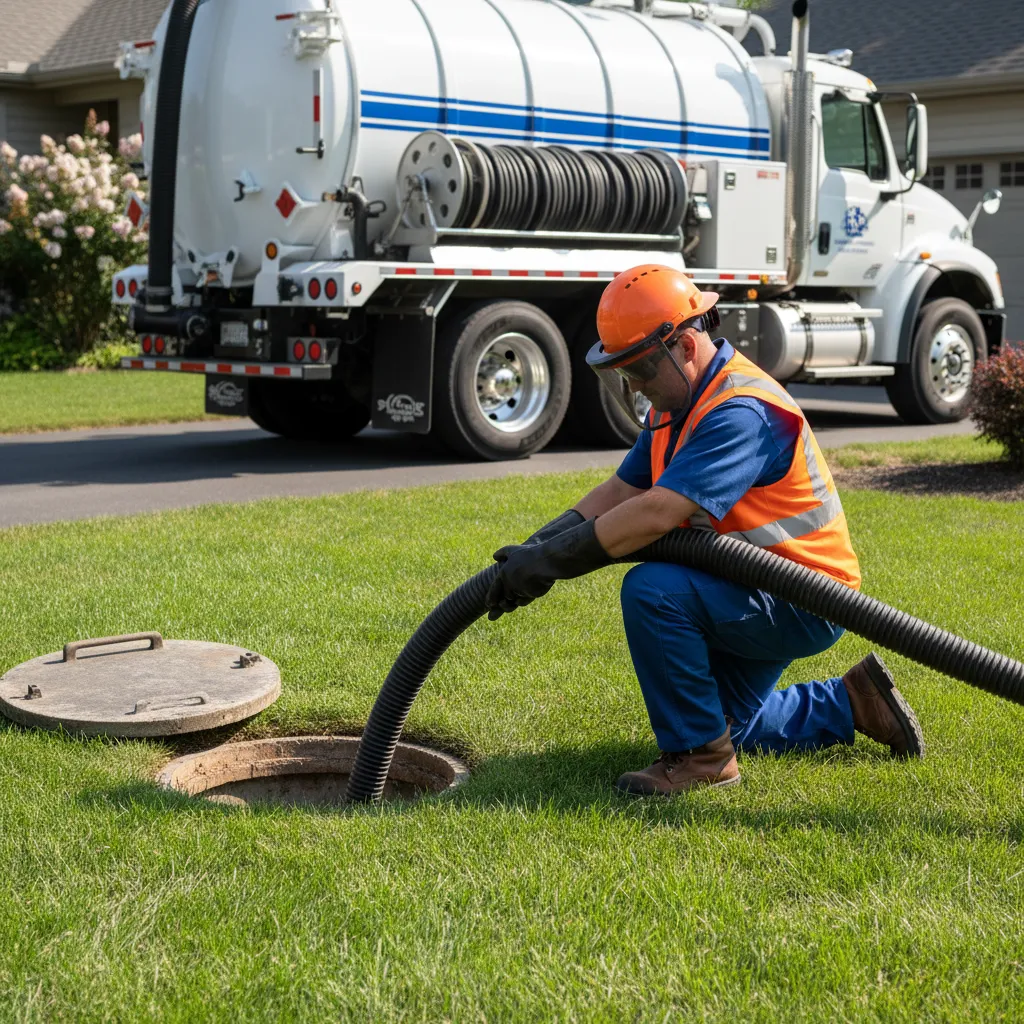
Signs You Need Septic Tank Pumping
Septic tank pumping is overdue when your system starts sending warning signals. Recognizing these signs early protects your drain field, your property, and your wallet.
Slow drains throughout the house:
When every sink, shower, and toilet drains sluggishly at the same time, the septic tank is likely full. Wastewater can’t exit the tank fast enough because accumulated sludge and scum have reduced the working volume. This isn’t a simple clog in one pipe – it’s a full tank that needs pumping.
Sewage odors near the tank or drain field:
A foul, putrid smell around your yard signals that the tank is overfull and gases are escaping through the access lid, inspection port, or saturated soil above the leach field. Odorous conditions mean anaerobic decomposition is overwhelming the system’s capacity.
Standing water or soggy ground over the absorption trench:
When the tank isn’t pumped on schedule, solids push into the distribution box and lateral lines. The biomat thickens, soil becomes saturated, and effluent rises to the surface. You’ll see stagnant, contaminated water pooling in the yard.
Gurgling sounds in your plumbing:
Air trapped in a backed up sewer line creates gurgling noises when you flush or run water. The septic tank has no room to accept new wastewater, so pressure builds in the inlet pipe and pushes air backward through your fixtures.
Alarm activation on your pump chamber:
If your system uses a dosing pump or submersible pump with a float switch, a high water alarm means effluent isn’t leaving the tank properly. An overfull tank with excessive sludge can trigger this alarm repeatedly until you schedule a pump out.
Our Septic Tank Pumping Process
Septic tank pumping is a systematic procedure that our crew follows the same way every time.

Locate and expose the tank.
We use your property records and our own locating tools to find the septic tank. If risers aren’t installed, we dig down to the access lid or manhole cover and clear the opening.
Open and assess.
Our technician removes the lid and performs an initial inspection. We measure the scum layer floating on top and the sludge layer settled at the bottom. These measurements get recorded on your service report.
Pump the tank.
We lower the vacuum truck’s suction hose into the tank and extract all contents – liquid effluent, suspended solids, sludge, and scum. The technician agitates stubborn sludge deposits to ensure a thorough cleanout.
Inspect internal components.
With the tank empty, we examine the concrete or fiberglass walls for cracks, check both baffles for damage, clean the effluent filter, and verify the inlet and outlet pipes are clear and properly connected.
Close, clean, and document.
We reseal the access lid, clean the work area, and provide you with a detailed written report covering tank condition, pumping volume, component status, and our recommended next service date.
Brands We Use
Septic tank pumping demands reliable, commercial grade equipment. Lakes Region Septic operates trucks and tools from manufacturers known for durability and performance in the waste hauling industry.






All equipment is maintained on a strict schedule and calibrated for safe, sanitary operation.
Other Services
Septic tank pumping
Septic tank cleaning
Pump septic tank
Residential septic pumping
Commercial septic pumping
Septic tank installation support
Septic pump out
Septic system cleaning
Empty septic tank
Home septic tank service
Business septic tank service
Septage hauling and disposal
Sludge removal service
Wastewater tank maintenance
Vacuum truck septic service
Drain field protection pumping
Septage hauling and disposal
|
Free septic pumping estimate
|
FAQs About Septic Tank Pumping
What is septic tank pumping?
Septic tank pumping is the process of removing accumulated sludge, scum, and liquid effluent from your septic tank using a vacuum truck. A certified pumper inserts a suction hose through the access lid and extracts all contents, then hauls the septage to a licensed disposal facility.
When should I schedule septic tank pumping?
Most residential septic tanks need pumping every three to five years. Household size, tank capacity, water usage, and garbage disposal use all affect the timeline. A family of four with a 1,000 gallon tank typically needs service closer to every three years.
Why does my septic tank need regular pumping?
Solids accumulate on the bottom as sludge and float on top as scum. Over time, these layers thicken and reduce the tank’s working volume. Without pumping, solids escape into the drain field, clog the distribution box and lateral lines, and cause costly system failure.
How long does a septic tank pump out take?
A standard residential pump out takes 30 to 60 minutes. Larger commercial tanks or systems with difficult access may take longer. Our crew handles locating, digging, pumping, inspecting, and closing the tank in a single visit.
Can I pump my own septic tank?
No. Septic tank pumping requires a licensed vacuum truck, proper disposal permits, and training in confined space hazards and sewage handling. Your health department mandates that only permitted haulers collect and transport septage. Lakes Region Septic holds all required licenses and insurance.
Does septic tank pumping fix slow drains?
Pumping resolves slow drains caused by an overfull tank. If your sludge and scum layers have consumed most of the tank’s capacity, a full pump out restores normal flow. If drains remain slow after pumping, the issue may involve a clogged effluent filter, damaged baffle, or failing drain field that needs further diagnosis.