
Septic Tank Cleaning
Professional septic tank cleaning keeps your plumbing system running and your property protected. Our company provides quality service you can count on.
Available 24/7 – Call Now for a Free Quote
Why Choose Lakes Region Septic?
Nationwide service coverage
Licensed and insured technicians
Same-day emergency service
Satisfaction guarantee on every job
5 Highlights on Septic Tank Cleaning
Thorough Sludge and Scum Removal
Septic tank cleaning is the process of pumping out accumulated solids, sludge layers, and scum layers that build up inside your tank over time. Our vacuum trucks extract every gallon of septage through a complete clean out, leaving your tank and sewer line ready to function properly.
Drain Field Protection
Routine septic tank cleaning prevents solids from migrating into your leach field and lateral lines. A clogged drain field costs thousands to replace. We recommend regular pump outs to stop that problem before it starts.
Full System Inspection Included
Every septic tank cleaning appointment includes a visual inspection of baffles, inlet pipes, outlet pipes, risers, and access lids. Our certified technicians assess and diagnose issues early so you avoid emergency repairs. These inspections protect your investment.
Residential and Commercial Service
Lakes Region Septic cleans septic tanks for homes, businesses, restaurants, and municipal properties. Serving residential plumbing needs and commercial clients alike, we provide plumbing services for standard gravity fed systems, pump chamber setups, mound systems, and holding tanks.
Proper Septage Disposal
All waste hauled during septic tank cleaning goes to a licensed disposal site or treatment plant. We follow state and local regulations for every load our pump trucks carry.
Why Choose Our Septic Tank Cleaning
Septic tank cleaning is a job that demands the right equipment, trained technicians, and strict disposal protocols. As a trusted plumbing company, Lakes Region Septic delivers on all three and we provide results you can depend on.
We operate a fleet of commercial grade vacuum trucks sized for residential cesspools and large commercial holding tanks alike. Our crews pump, inspect, and diagnose septic systems every day. Working hands on as your local plumber, that experience means we spot corroded baffles, cracked tee fittings, and saturated drain fields that less experienced companies miss. We help solve problems others overlook.
Lakes Region Septic holds all required septic permits and certifications for the region. We carry full liability insurance and are fully insured for your protection. Our technicians receive ongoing training in wastewater and plumbing system maintenance, safety procedures, and environmental compliance to ensure quality results.
We guarantee transparent pricing with no hidden fees. Call us for a free estimate and you’ll know the cost before we drop a single hose into your tank. Request a quote anytime. Our scheduling team works around your availability, and we offer same-day service, fast service, and emergency plumbing response when your system backs up without warning.
Customers trust us because we show up on time, do the work right, and leave the site clean. Over two decades of service in the Lakes Region area backs that reputation. Every customer review reflects our commitment to complete customer service. We treat every septic tank cleaning job with the same level of care, whether it’s a seasonal cabin or a busy commercial property.
Signs You Need Septic Tank Cleaning
Septic tank cleaning is overdue when your system starts sending clear warning signals. Recognizing these signs early saves you from costly repairs, reduces risk, and addresses plumbing needs before unsanitary conditions develop on your property.
Slow Drains Throughout the House:
A single slow drain might mean a localized clog. When every sink, shower, and toilet in your home drains sluggishly at the same time, your septic tank has likely accumulated too much sludge. The effluent can’t flow out through the outlet pipe because settled solids are taking up tank capacity and creating pressure. A full pump out restores normal drainage.
Foul Odors Near the Tank or Drain Field:
Putrid, rancid smells around your septic tank access lid, yard, or near the distribution box indicate that sewage isn’t processing correctly. Odorous gas escapes when the scum layer thickens beyond the tank’s utility to contain it. Septic tank cleaning removes the source of those gases.
Standing Water or Soggy Ground Over the Leach Field:
Saturated soil above your percolation trenches or absorption bed means effluent is surfacing instead of percolating downward. This often happens when solids overflow from an overfull tank and form a biomat that clogs the filter media and gravel bed. Cleaning the tank is the first step in remediation, and trenchless methods can minimize landscaping damage during repairs.
Sewage Backup Into the Home:
Blackwater or wastewater backing up through floor drains, toilets, or tubs is an emergency. The tank is full, the inlet pipe is blocked, or both. Contact us for prompt service – you need immediate septic tank cleaning to relieve the system and prevent contaminated water from spreading through your living space.
It's Been Three or More Years Since Your Last Pump Out:
Most residential septic tanks need cleaning every three to five years, depending on household size and tank volume. If you can’t remember your last service date, the sludge and scum layers inside your tank are almost certainly due for removal. Speak with our team for an evaluation.
Our Septic Tank Cleaning Process
Septic tank cleaning is a systematic procedure that our crews follow the same way every time. Let us explain each step.

Locate and Access the Tank
We use property records, probe rods, and electronic locators to find buried septic tanks. Our crew excavates soil over the access lid or septic riser lid and removes it to expose the tank opening.
Initial Assessment
Before pumping begins, a technician inspects the scum layer thickness, sludge layer depth, and liquid level. This tells us the tank’s current condition since original installation and whether any abnormalities exist, such as an overflowing or backed up system.
Pump and Vacuum the Tank
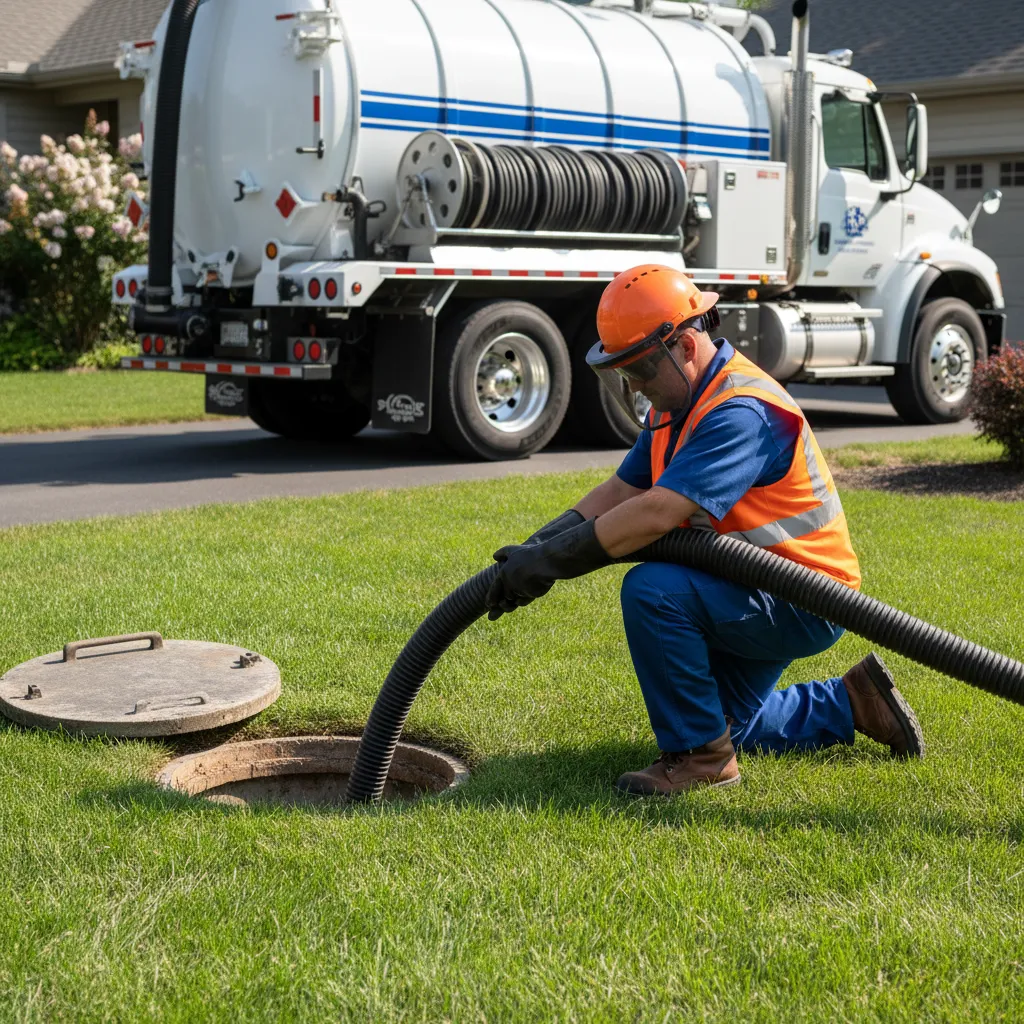
We connect our vacuum truck’s suction hose to the tank opening and extract all contents. The operator agitates settled solids with a jet of recirculated liquid to dislodge compacted sludge from the tank floor and corners. We pump until the tank is completely empty.
Inspect Internal Components
With the tank empty, our technician examines the baffles, inlet pipe, outlet pipe, tee fittings, and tank walls. We check for cracks, corrosion, root intrusion, and any structural damage. We also verify clearance from water line and gas line infrastructure. You receive a verbal report on site and a written summary with clear communication of our findings.
Close, Backfill, and Document
We reseal the access lid, backfill any excavated soil with care for your garden plumbing and yard, and record the service date, tank condition, and any recommended repairs. This documentation helps you track your maintenance schedule and satisfies requirements for septic permit renewals or property sales.
Brands We Use
Septic tank cleaning requires dependable, commercial grade equipment that performs under demanding conditions.




Every piece of equipment we bring to your property meets current safety and environmental standards.
Other Services
Septic tank cleaning
Septic tank pumping
Residential septic cleaning
Commercial septic tank cleaning
Emergency septic cleaning
Septic tank pump out
Septic system pumping
Home septic tank service
Business septic pumping
Same day septic pump out
Sludge removal service
Vacuum truck septage hauling
Household wastewater tank maintenance
Grease trap and holding tank service
Backed up septic system repair
FAQs About Septic Tank Cleaning
What is septic tank cleaning?
Septic tank cleaning is the removal of accumulated sludge, scum, and liquid waste from your septic tank using a vacuum truck. A technician suctions out all contents, inspects internal components like baffles, pipes, and sewer connections, and leaves the tank empty and ready to process wastewater again.
When should I schedule septic tank cleaning?
Most residential tanks need cleaning every three to five years. Households with garbage disposals, large families, or heavy water usage may need service every two to three years. Commercial properties with grease traps or high volume wastewater often require annual pump outs.
Why does my septic tank need regular cleaning?
Solids accumulate on the tank floor as sludge, and grease floats to the top as scum. Without periodic cleaning, these layers grow until they block the outlet pipe or push into your drain field line. A clogged leach field can fail entirely, requiring excavation and replacement that costs far more than routine maintenance.
How long does septic tank cleaning take?
A standard residential septic tank cleaning takes 30 to 60 minutes from setup to completion. Larger tanks, difficult access points, or tanks that haven’t been serviced in many years may take longer. Our crew handles locating, pumping, inspecting, and closing the tank in a single visit for complete service.
Can I clean my septic tank myself?
No. Septic tank cleaning requires a licensed vacuum truck, proper safety equipment, and access to an approved disposal site. The gases inside a septic tank, including hydrogen sulfide and methane, are toxic and potentially fatal. Certified professional septic service technicians carry the training and equipment to do this work safely.
Does septic tank cleaning fix slow drains?
Septic tank cleaning resolves slow drains caused by an overfull tank. If your drains remain sluggish after a pump out, the issue may involve a clogged inlet pipe, damaged distribution box, or saturated drain field. Our technicians help diagnose these problems during the inspection phase of every cleaning appointment.