
Drain Field Replacement
Professional drain field replacement services to restore your septic system’s full function and protect your property from wastewater failure.
Available 24/7 – Call Now for a Free Quote
Why Choose Lakes Region Septic?
Nationwide service coverage
Licensed and insured technicians
Same-day emergency service
Satisfaction guarantee on every job
5 Highlights on Drain Field Replacement
Complete Leach Field Removal and Reinstallation
Our crew excavates the failing drain field, removes degraded perforated pipe and collapsed lateral lines, and installs a new absorption bed engineered to your soil conditions and household demand.
Perc Testing and Soil Analysis Included
Every drain field replacement starts with a current perc test and soil evaluation. We measure percolation rates, check the water table depth, and confirm setback distances before we trench a single foot.
Distribution Box Inspection and Upgrade
A corroded or misaligned D-box causes uneven effluent flow across your lateral lines. We inspect, repair, or replace the distribution box during every drain field replacement project.
Compliant Permitting and Engineering
We pull all required permits, coordinate with local health departments, and work with certified septic engineers to design a replacement drain field that meets current residential code.
Graded, Backfilled, and Restored Property
After we install the new drainfield media, we backfill with clean aggregate and topsoil, compact the surface to proper grade, and leave your yard ready for seeding or landscaping.
Why Choose Our Drain Field Replacement
Drain field replacement is one of the most involved septic services a homeowner will face. The work demands accurate soil science, proper excavation, and precise installation of every component from the header pipe to the last foot of perforated pipe. Lakes Region Septic has performed hundreds of these replacements across the region, and our results hold up year after year.
We employ certified septic contractors who understand subsurface wastewater disposal at every level. Our team doesn’t guess at pipe spacing or trench depth. We calculate those figures from your perc test data, your home’s daily wastewater output, and the specific soil profile on your lot. That precision prevents premature biomat buildup and keeps effluent percolating through the soil the way it should.
We own our excavators and backhoes. That means no rental delays and no subcontracted operators unfamiliar with septic work. Our crews grade trenches to exact specifications, set infiltrator chambers or gravel beds to the correct elevation, and verify even distribution of effluent before we backfill.
Lakes Region Septic backs every drain field replacement with a written workmanship guarantee. We also provide a post-installation inspection at no extra charge to confirm the new leach field is absorbing and distributing effluent properly. When you need a trusted, qualified team for this work, we’re the call to make.
Signs You Need Drain Field Replacement
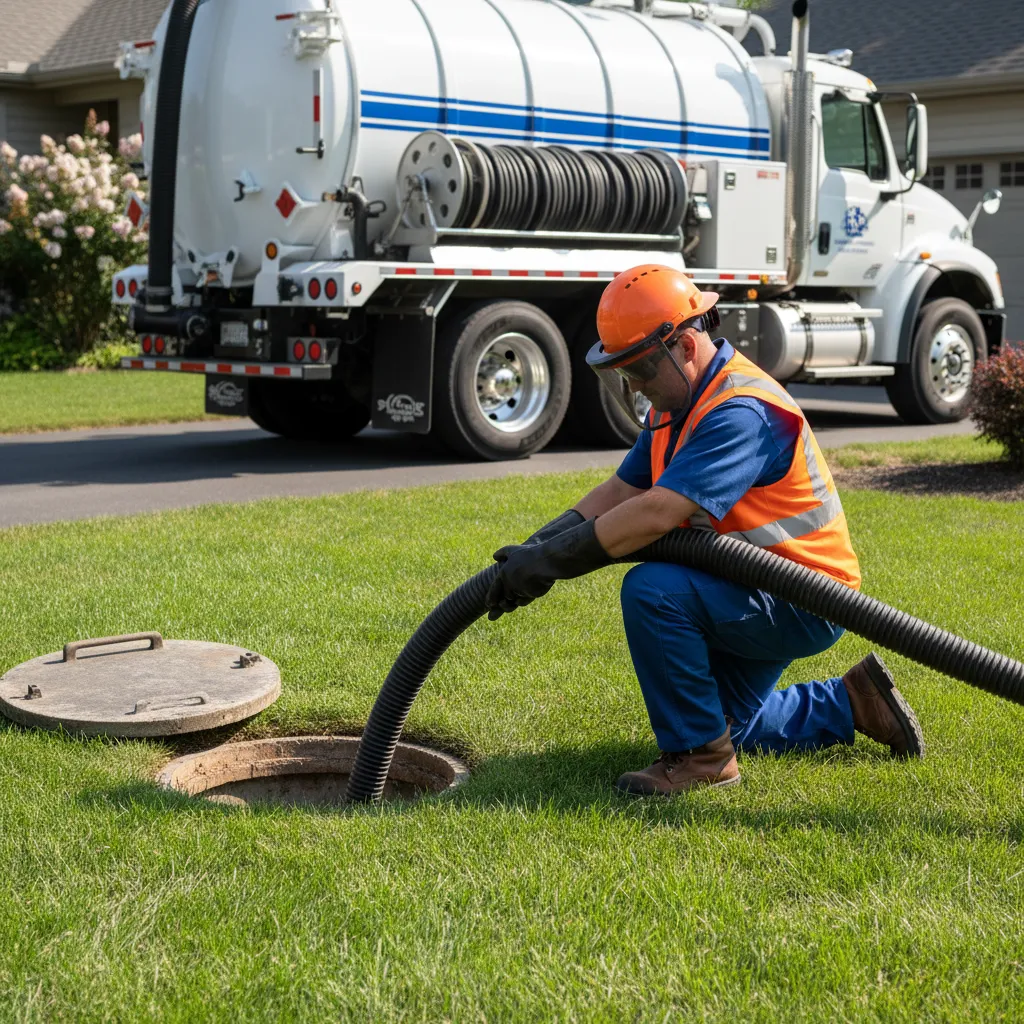
Drain field failure doesn’t happen overnight. The system sends warning signals for weeks or months before it stops functioning. Recognizing these signs early can save you from groundwater contamination, property damage, and costly emergency excavation.
Soggy or Waterlogged Yard Over the Leach Field:
Standing water or persistently soggy ground directly above your lateral lines means the soil can no longer absorb effluent. A saturated, failing absorption bed has lost its percolation capacity. The biomat layer has thickened to the point where wastewater seeps to the surface instead of filtering downward through porous soil.
Sewage Odor Near the Drain Field Area:
An odorous smell around your yard, especially near the distribution box or trench lines, signals that untreated or partially treated effluent is pooling at or near the surface. Healthy drain fields process wastewater underground without producing detectable odors at ground level.
Slow Drains and Toilet Backflow Inside the Home:
When your drain field can’t accept more effluent, wastewater backs up through the entire system. You’ll notice slow drains in the lowest fixtures first. Backed-up toilets and gurgling pipes follow. This isn’t a simple clog. It’s a hydraulic overload caused by a failed leach field.
Bright Green Grass Strips Over Lateral Lines:
Unusually lush, bright green grass growing in strips above your perforated pipes indicates that effluent is rising too close to the root zone. The grass feeds on nitrogen-rich wastewater that a functioning drain field would have dispersed deeper in the soil column.
Failed Perc Test or Health Department Notice:
If a perc test reveals that your soil’s absorption rate has dropped below acceptable thresholds, or your local health department has issued a notice of system failure, drain field replacement is the required remedy. Remediation at that stage means full excavation and new installation.
Our Drain Field Replacement Process
Drain field replacement is a structured, multi-phase project. Each step builds on the last to deliver a fully compliant, long-lasting leach field.

Site Evaluation and Perc Test
We begin with a thorough inspection of the existing drain field. Our technicians perform a soil test and perc test to determine current absorption rates, identify the water table depth, and map the best location for the replacement field.
System Design and Permitting
Using perc test results and your home’s wastewater volume, we design the new drain field layout. We specify trench dimensions, pipe spacing, drainfield media type, and distribution box placement. We then submit plans and pull the required permit from your local authority.
Excavation and Removal
Our operators bring in an excavator to remove the old lateral lines, clogged gravel bed, degraded geotextile fabric, and compacted soil. We haul away all spent materials and prepare a clean subgrade.
Installation
We trench to engineered depth and grade, lay new drain rock or infiltrator chambers, set perforated pipe at the correct slope, and connect everything to a new or inspected distribution box. Every fitting, every joint, every lateral line gets checked before we move forward.
Backfill, Compaction, and Final Inspection
We backfill trenches with aggregate and topsoil, compact the surface to prevent settling, and perform a final inspection. We verify effluent flows evenly from the D-box through all lateral lines and confirm the system meets code.
Brands We Use
Drain field replacement requires components built to last underground for decades.







Every product we install meets or exceeds local code requirements.
Other Services
Service Category 1
Drain field replacement
Replace drain field
Drain field replacement cost
Residential drain field replacement
Professional drain field replacement
Pipe Bursting
Intrusion removal
Emergency plumbing
Service Category 2
Leach field replacement
New drain field installation
Absorption bed replacement
Percolation field replacement
Septic leach field replacement
Hydrojetting
Day service
Lline repair
Service Category 3
Septic drain field installation
Failing leach field repair
Septic system drain field
Drain field excavation service
Distribution box and lateral line install
System installation
Drain cleaning
FAQs About Drain Field Replacement
What is drain field replacement?
Drain field replacement is the complete removal of a failing or failed leach field and the installation of a new subsurface absorption system. The process includes excavating old trenches, removing spent gravel and perforated pipe, and installing new drainfield media, lateral lines, and a distribution box designed to current code and soil conditions.
When does a drain field need to be replaced?
A drain field needs replacement when the soil beneath it becomes saturated and can no longer absorb effluent. Common triggers include a thick biomat layer that blocks percolation, crushed or clogged perforated pipes, a waterlogged absorption bed, or a failed perc test. If your yard is soggy over the leach field or sewage backs up into the home, replacement is likely the only lasting fix.
How long does drain field replacement take?
Most residential drain field replacements take three to five days from excavation to final backfill. Permitting and perc testing add one to three weeks of lead time before ground breaks. Larger systems, engineered mound designs, or difficult soil conditions can extend the timeline.
Can you replace a drain field in the same location?
Sometimes. If the original site still meets setback requirements and the soil hasn’t been permanently degraded, we can install a new drain field in the same footprint. In many cases, local code requires a designated reserve area for the replacement field, and we’ll install there instead.
Does a new drain field require a permit?
Yes. Every drain field replacement requires a permit from your local health department or code enforcement office. Lakes Region Septic handles the full permitting process, including engineered plans, soil test documentation, and inspection scheduling, so you don’t have to manage the paperwork yourself.
How much does drain field replacement cost?
Cost depends on system size, soil conditions, drainfield media type, and local permit fees. A standard residential gravity-fed drain field replacement typically ranges from $5,000 to $20,000. Pressurized systems, mound systems, or sites with a high water table run higher. We provide detailed written estimates before any work begins.