
Grease Trap Installation
Professional grease trap installation for residential and commercial properties across the Lakes Region.
Available 24/7 – Call Now for a Free Quote
Why Choose Lakes Region Septic?
Nationwide service coverage
Licensed and insured technicians
Same-day emergency service
Satisfaction guarantee on every job
5 Highlights on Grease Trap Installation
Interceptor grade equipment
We install high capacity grease interceptors and grease traps from precast concrete, fiberglass, and polyethylene units sized to match your facility’s hydraulic load and flow rate.
Full permit coordination
Our team handles health department permits, perc tests, and soil tests before any excavation begins, so your grease trap installation meets every local and state compliance requirement from day one.
Commercial and residential service
Lakes Region Septic installs grease traps for restaurant kitchens, food processing facilities, residential properties, and any operation that generates fats oils and grease (FOG) in its wastewater stream.
Precision plumbing connections
Every installation includes properly graded inlet pipes, outlet pipes, tee baffles, flow restrictors, and backflow preventers connected to your existing sewer line or septic tank system.
Trusted local expertise
Our certified septic contractors carry decades of combined experience installing, inspecting, and commissioning grease traps throughout the Lakes Region, backed by a workmanship guarantee on every job.
Why Choose Our Grease Trap Installation
Grease trap installation is a specialized trade that demands exact sizing, proper grading, and code compliant plumbing. Lakes Region Septic brings all three to every project.
We don’t subcontract. Our own licensed septic contractors and licensed plumber professionals excavate, plumb, connect, seal, and commission each grease interceptor on site. That single point of accountability means fewer delays, cleaner communication, and a finished installation you can trust.
Sizing matters. An undersized unit will overflow and accumulate FOG in your sewer line. An oversized unit wastes money and space. We calculate retention time, hydraulic load, and peak flow rates specific to your operation before recommending a grease trap or grease interceptor model. Every recommendation accounts for your kitchen output, fixture count, and local health department standards.
Our installations include sampling ports and inspection ports for easy future maintenance. We also install overflow alarms and high water alarms on commercial units so you’ll know the moment something needs attention.
Lakes Region Septic guarantees compliant installations. We pull the permit, schedule the inspection, and stand behind our work. If the health department flags anything during review, we correct it at no extra charge. That’s the kind of confidence that comes from doing this work right, every time, across hundreds of grease trap installations in the region.
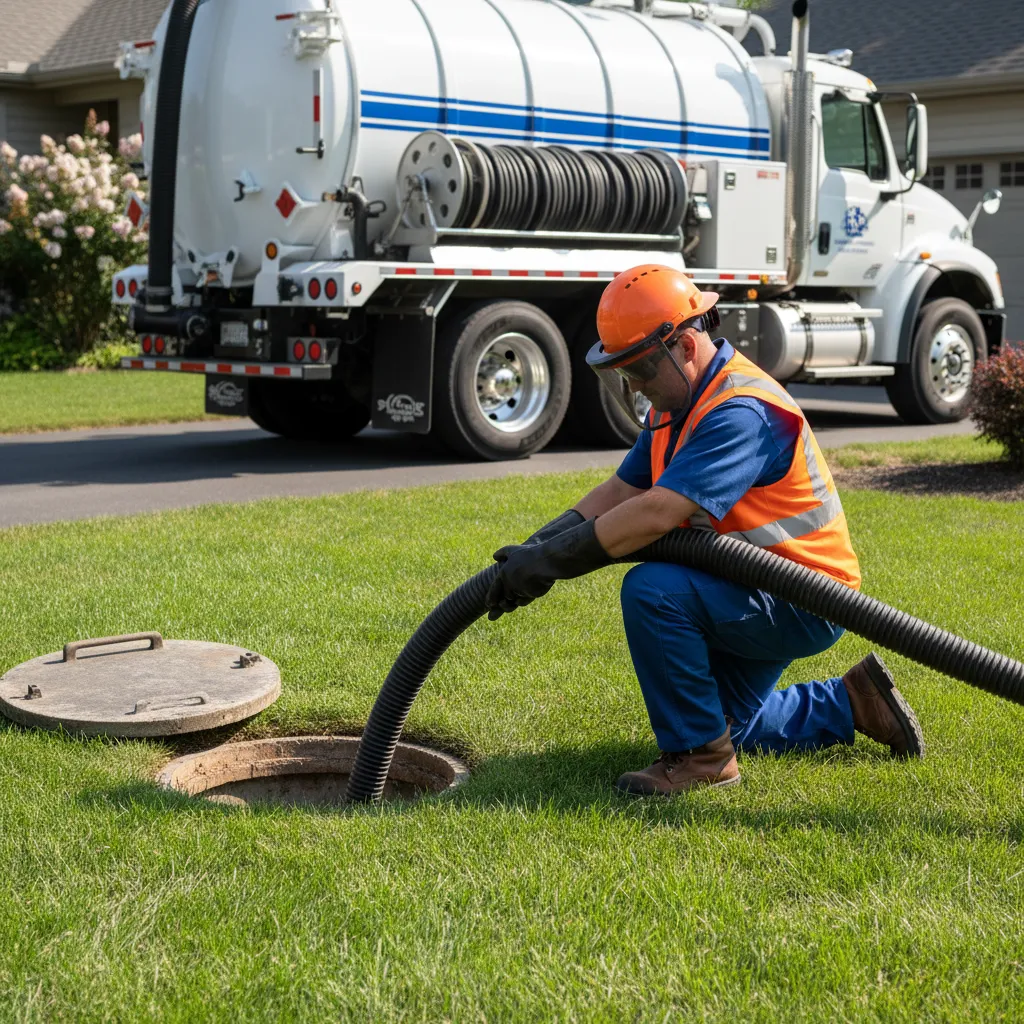
Signs You Need Grease Trap Installation
Grease trap installation is the direct solution when FOG starts causing problems in your plumbing or septic system. Here are five signs your property needs one.
Recurring drain clogs in kitchen lines:
If your kitchen sinks, floor drains, or dishwasher lines clog repeatedly despite snaking and jetting, grease laden wastewater is coating the interior walls of your pipes. A properly installed grease trap intercepts FOG before it enters the sewer line or septic tank, stopping the cycle of buildup and blockage at its source. Don’t wait for an emergency plumbing situation – address grease buildup before it causes a complete blockage.
Foul odors near drains or cleanouts:
Rancid, odorous grease accumulating inside pipes decomposes anaerobically and produces sulfur gases. These smells seep through P traps, cleanouts, and vent pipes. A grease interceptor separates and traps FOG in a contained unit, eliminating the source of those persistent odors.
Health department notices or compliance violations:
Commercial kitchens that discharge grease laden wastewater without an interceptor grade grease trap risk non compliant status. Health departments across the Lakes Region require food service establishments to install and maintain approved grease interceptors. A notice from the health department means you need professional grease trap installation now – contact us for emergency service if you’re facing a compliance deadline.
Septic tank pumping frequency has increased:
When FOG enters your septic tank unchecked, the scum layer thickens rapidly. This reduces clarified zone volume, shortens retention time, and forces more frequent pump outs. Installing a grease trap upstream of the septic tank protects the entire soil absorption system.
New construction or kitchen renovation:
Any new commercial kitchen, restaurant buildout, or residential kitchen remodel that adds a dishwasher, prep sink, or floor drain needs a grease trap sized and installed to code before the first day of operation.
Our Grease Trap Installation Process
Grease trap installation is a multi step process that Lakes Region Septic completes from initial assessment through final commissioning.

Site evaluation and sizing
We inspect your property, assess fixture count, measure peak flow rates, and calculate the required hydraulic load. We also perform a soil test if the installation connects to a subsurface disposal system.
Permit acquisition
We prepare and submit all permit applications to your local health department. No excavation begins until the permit is approved and on file.
Excavation and preparation
Our crew excavates the installation site, grades the base, and places a compacted gravel bed to support the grease trap unit. Proper grading ensures gravity fed flow from your kitchen plumbing to the interceptor.
Unit placement and plumbing
We set the precast concrete, fiberglass, or polyethylene grease trap into position. Then we connect the inlet pipe, outlet pipe, tee baffles, flow restrictor, and all fittings. Every joint gets sealed and tested for waterproof integrity.
Backfill and connection
We backfill around the unit with approved aggregate, install risers and a septic riser lid for access, and connect the outlet to your sewer line, septic tank, or distribution box.
Inspection and commissioning
We schedule the health department inspection, verify all connections, test flow rates, and commission the grease trap for active service. You receive full documentation of the installation. Ready to schedule service? Contact Lakes Region Septic today.
Brands We Use
Lakes Region Septic installs products from these trusted manufacturers:






Every unit we install carries the manufacturer’s warranty and meets local health department specifications.
Other Services
Service Category 1
Grease trap installation
Commercial grease trap install
Grease trap installer near me
Residential grease trap installation
Grease trap replacement and installation
Schedule grease trap service
Service Category 2
Grease interceptor installation
Restaurant grease interceptor service
Local grease trap contractor
Home grease trap setup
New grease interceptor hookup
Emergency plumbing grease trap
Service Category 3
FOG management system setup
Kitchen wastewater pretreatment
Septic grease interceptor plumbing
Underground grease separator install
Grease trap sizing and permitting
24/7 grease trap emergency service
FAQs About Grease Trap Installation
What is a grease trap, and how does it work?
A grease trap is a plumbing device that intercepts fats oils and grease before they enter your sewer line or septic tank. Grease laden wastewater flows into the trap, where FOG separates and floats to the top as a scum layer. Clarified effluent exits through the outlet pipe. Baffles inside the unit slow the flow and improve separation.
When do I need a grease trap installed?
You need grease trap installation when you’re opening a commercial kitchen, renovating an existing food service space, receiving health department compliance notices, or experiencing chronic grease clogs in your plumbing. New construction projects with commercial cooking facilities require a permitted grease interceptor before they can operate.
Why can't I just use drain additives instead of installing a grease trap?
Additives and enzymes can help decompose some FOG, but they don’t replace a physical grease interceptor. Health departments require mechanical separation of FOG from wastewater in commercial settings. Additives alone won’t bring your facility into compliant status.
How long does grease trap installation take?
Most residential grease trap installations take one day. Commercial grease interceptor installations typically require two to three days depending on unit size, excavation depth, and plumbing complexity. Permit processing adds additional lead time before work begins.
Can Lakes Region Septic install a grease trap if I already have a septic tank?
Yes. We install grease traps upstream of existing septic tanks to intercept FOG before it reaches the tank. This protects your septic tank, effluent filter, distribution box, and drain field from grease accumulation and premature failure.
Does my grease trap need maintenance after installation?
Every grease trap requires regular pumping, cleaning, and inspection. Commercial units typically need service every one to three months depending on volume. Lakes Region Septic provides ongoing grease trap maintenance and desludging to keep your unit operating at full capacity.