Septic System Replacement
Professional septic system replacement for residential and commercial properties across the Lakes Region – call our expert team to address your sewer and plumbing needs
Available 24/7 – Call Now for a Free Quote
Why Choose Lakes Region Septic?
Nationwide service coverage
Licensed and insured technicians
Same-day emergency service
Satisfaction guarantee on every job
5 Highlights on Septic System Replacement
Full tank and drain field removal
Our expert team excavates deteriorated septic tanks, corroded distribution boxes, and failing leach fields, then handles all septage and debris disposal off site using our vacuum truck fleet.
Engineered system design
Every septic system replacement starts with a current perc test and soil test so our environmental engineer can size the new tank, absorption trenches, and lateral lines to match your property’s percolation rate and daily wastewater load, ensuring long-term efficiency and functionality.
Code compliant permitting
We file all permit applications with the local health department and schedule required inspections, so your new on site system meets current building code and setback requirements from the beginning.
Quality materials and components
We install high-quality precast concrete and fiberglass tanks, Infiltrator gravelless chambers, geotextile fabric, and certified PVC pipe rated for subsurface wastewater service, including components tailored to your property.
Minimal property disruption
Our operators grade and backfill each excavation site with clean aggregate and approved backfill material, then restore the surface so your yard recovers quickly after the replacement is complete. We strive to prevent any unnecessary damage to your landscaping.
Why Choose Our Septic System Replacement
Septic system replacement is a major investment in your property’s sanitation infrastructure. Lakes Region Septic has completed hundreds of residential and commercial replacements across the region, and our licensed septic professionals bring decades of field experience to every job. Homeowners and business owners trust our company to handle their most complex plumbing services with care.
We own our equipment. Our backhoes, excavators, and pump trucks stay on our lot, which means we don’t wait on rental availability to start your project. That keeps your timeline short and your costs predictable – with no hidden fees to impact your budget.
Every replacement we perform carries a written workmanship guarantee. We stand behind our installations because we control the installation process from the initial soil test through final health department inspection. Our crews don’t cut corners on aggregate depth, pipe grade, or tank bedding. We ensure every customer is satisfied with the value they receive.
We’re certified to install conventional gravity fed systems, pressurized mound systems, advanced treatment units, and alternative sand filter configurations. Our team is equipped to address issues that cause trouble for other contractors. That range of qualifications matters when your site has a high water table, tight setbacks, or saturated soils that rule out a standard leach field.
Pricing is transparent. We provide a detailed, line item estimate that covers excavation, materials, labor, permit fees, and site restoration. No surprise charges show up after the backhoe arrives. Contact Lakes Region Septic to request a quote – we’re the trusted, top rated choice for septic system replacement because we treat your property like our own.
Signs You Need Septic System Replacement
Septic system replacement becomes necessary when repairs can no longer restore safe, reliable wastewater treatment. If you understand these warning signs, you can plan appropriately and avoid a complete system break. Here are five signs your current system has reached the end of its service life.
Persistent sewage surfacing in the yard:
When effluent pools above your drain field or saturates the soil near your tank, the subsurface absorption trenches have likely failed. A biomat layer formed by anaerobic bacteria can seal the gravel bed so completely that no amount of resting or aeration will restore adequate percolation. Surfacing sewage is a safety hazard with serious environmental impact and a clear indicator that the entire leach field needs replacement.
Recurring backups into the house:
A single clogged drainpipe is a repair. Repeated backups after pumping, jetting, and snaking point to a structural problem – a collapsed baffle, a cracked divider wall, or a deteriorated outlet pipe that allows solids to migrate into the distribution box and clog the lateral lines. Slow drains and toilets running poorly are early warning signs.
Tank structural failure:
Concrete tanks corrode over decades. Corroded lids, cracked compartments, and compromised inlet fittings let groundwater infiltrate the tank, which overwhelms the drain field with excess volume. A structurally failing tank can’t be patched back to code compliance. Check your system regularly – routine maintenance helps prevent these issues.
Non compliant system flagged during inspection:
Property sales, additions, and change of use permits trigger inspections. If the health department finds your system undersized, improperly sited, or missing required components like an effluent filter or riser, a full septic system replacement may be the only path to certification.
Age beyond expected lifespan:
Most conventional septic systems last 25 to 30 years. If your tank is older than that and you’re spending money on frequent tank pump outs, alarm calls, and emergency repairs, replacing the entire system is the more cost effective and reliable long-term solution. Call our team if you expect your system is reaching the end of its service life.
Our Septic System Replacement Process
Septic system replacement follows a structured sequence that protects your property and satisfies all regulatory requirements. Our professionals help you understand what to expect at each stage of the project.

Site assessment and soil testing
We visit your property, locate the existing system, and perform a perc test and soil evaluation. These results determine what type of replacement system your lot can support.
System design and permitting
Our designer engineers the new layout, specifying tank size, drain field dimensions, distribution box placement, and pipe routing. We submit the design to the health department and secure the required permit before any digging begins.
Decommissioning the old system
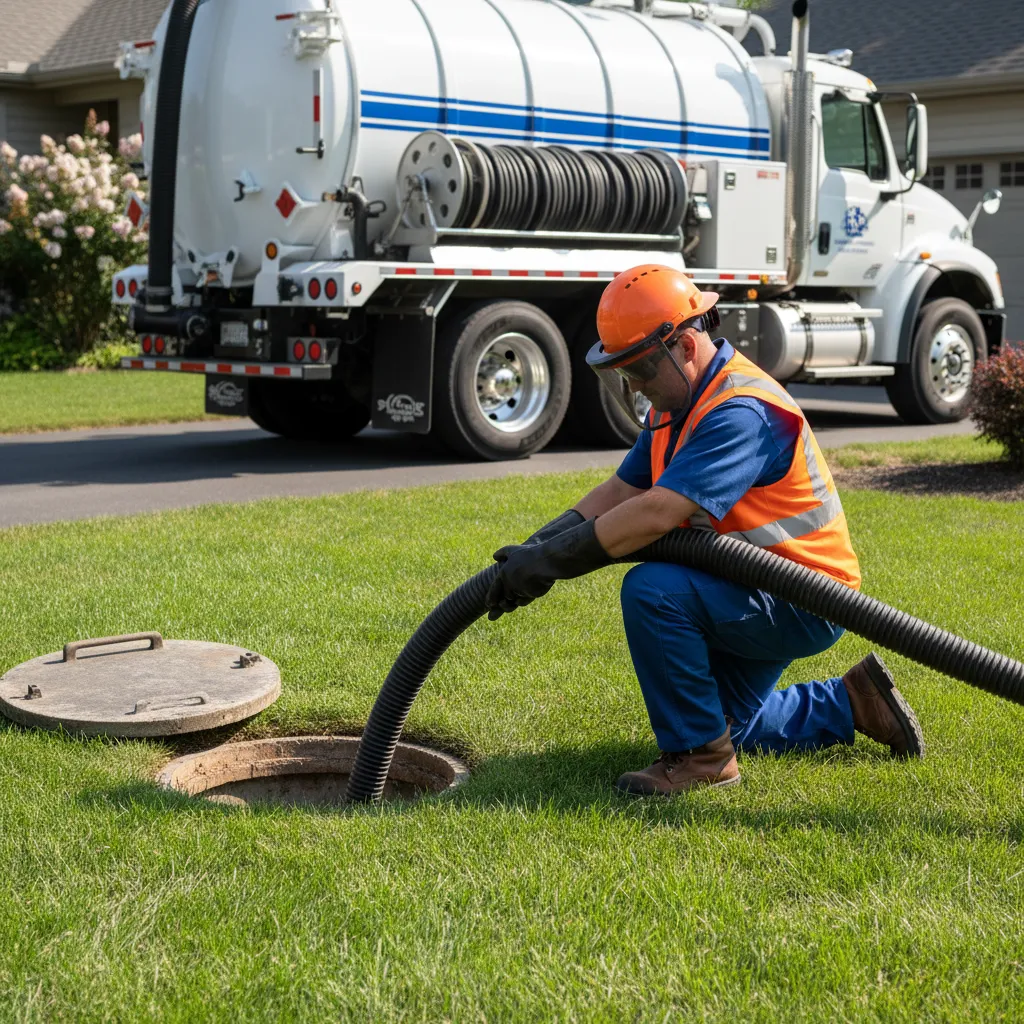
Our pump truck vacuums all septage from the existing tank for proper disposal. Crews then excavate the old tank, distribution box, and drain field piping. We crush or remove the old tank per local code and haul all waste to a licensed treatment plant. Septic Tank Pumping and cleaning are part of this initial phase.
Installation
The excavator prepares the new tank bed and absorption trenches to precise grade. We set the new septic tank, connect inlet and outlet pipes, install the distribution box or dosing chamber, lay lateral lines with Infiltrator chambers or gravel bed media, and wrap everything in geotextile fabric where specified. Every component is installed by our expert crew.
Inspection, backfill, and restoration
The health department inspector verifies depth, slope, setbacks, and component placement. Once approved, we backfill with clean aggregate and approved material, compact carefully, and grade the surface for proper drainage. Oxygen exchange in the drain field supports the breakdown of waste, and our work ensures the system will be running efficiently for years.
Brands We Use
Lakes Region Septic installs products from these trusted manufacturers:





We select each component based on your soil conditions, system design, and local code requirements.
Other Services
Service Category 1
Septic system replacement
Septic tank replacement
Drain field replacement
Residential septic replacement
Commercial septic replacement
Service Category 2
Replace septic system
Septic system removal and replacement
Leach field replacement
Home septic system replacement
Full septic system replacement near me
Service Category 3
New septic tank installation cost
How much to replace a septic system
Failing septic system signs
Septic system replacement permit
Septic system replacement process
FAQs About Septic System Replacement
What does septic system replacement include?
A full septic system replacement includes decommissioning and removing the old tank, distribution box, and drain field, then installing a completely new system – tank, piping, distribution components, and absorption area. The scope depends on whether you need a conventional gravity fed system, a pressurized mound system, or an advanced treatment unit. Contact our company with questions about what your project will include.
When should I replace my septic system instead of repairing it?
You should replace your septic system when the tank has structural cracks or corrosion that can’t be sealed, the drain field soil is permanently saturated with biomat, or the system is non compliant with current building code and can’t be brought up to standard through component repairs alone. If your closed loop system is beyond repair, replacement is the appropriate path forward.
How long does a septic system replacement take?
Most residential replacements take three to five working days from excavation through final backfill. Permitting and soil testing add one to four weeks of lead time before ground work begins, depending on your local health department’s review schedule. Our team works within normal business hours and can address your project efficiently.
How much does it cost to replace a septic system?
Costs vary based on system type, tank size, soil conditions, and site access. A conventional gravity fed replacement typically ranges from $10,000 to $25,000. Alternative systems like mound systems or advanced treatment units can run $15,000 to $40,000 or more. We provide a detailed quote tailored to your budget and specific needs.
Can I stay in my home during septic system replacement?
Yes. We coordinate the work so your household has minimal disruption. In most cases, we connect the new system and restore wastewater service within the same project window, and temporary accommodations aren’t needed. Your plumbing, drains, and toilets will be back in service once we complete the work.
Does my town require a permit for septic system replacement?
Yes. Every municipality in the Lakes Region requires a permit from the health department before any septic installation or replacement work begins. Lakes Region Septic handles the entire permit application and inspection scheduling process for you. Visit our address at 25 Robinson Road, Brookfield, NH, or call (833) 435-3846 for more information.