Commercial Septic Pumping
Professional commercial septic pumping solutions for businesses that depend on reliable wastewater and plumbing systems to meet their daily needs
Available 24/7 – Call Now for a Free Quote
Why Choose Lakes Region Septic?
Nationwide service coverage
Licensed and insured technicians
Same-day emergency service
Satisfaction guarantee on every job
5 Highlights on Commercial Septic Pumping
High capacity vacuum trucks
Lakes Region Septic deploys heavy duty pump trucks equipped to handle large volume commercial septic tanks, grease interceptors, and holding tanks in a single service visit. Our experienced team pumps out thousands of gallons of septage and sludge efficiently so your business stays operational and every customer remains satisfied.
Licensed and certified technicians
Every operator on our crew holds current state certification and follows EPA disposal regulations. We comply with local health department codes and maintain all required permits for commercial septage hauling and disposal.
Scheduled maintenance contracts
Commercial septic pumping on a routine schedule prevents costly overflows, drain field failures, and regulatory violations. We build custom pumping schedules around your facility’s wastewater output and tank capacity so you never have to worry about unexpected issues.
Grease trap and interceptor service
Restaurants, cafeterias, and food processing facilities generate fats oils and grease that can clog septic systems fast. Clogged lines cause backups and overflow. We degrease, vacuum, and clean commercial grease traps as part of our full service pumping program and cleaning services.
Emergency pumping available
Overflowing septic tanks and backed up lift stations can’t wait. Lakes Region Septic provides emergency commercial pumping and emergency plumbing support with rapid response times to minimize downtime and environmental risk. Contact our team any time.
Emergency pumping available
Commercial septic pumping is a specialized service that demands the right equipment, proper licensing, and deep knowledge of decentralized wastewater systems. Lakes Region Septic brings all three to every job. Our expert technicians have the experience you can trust.
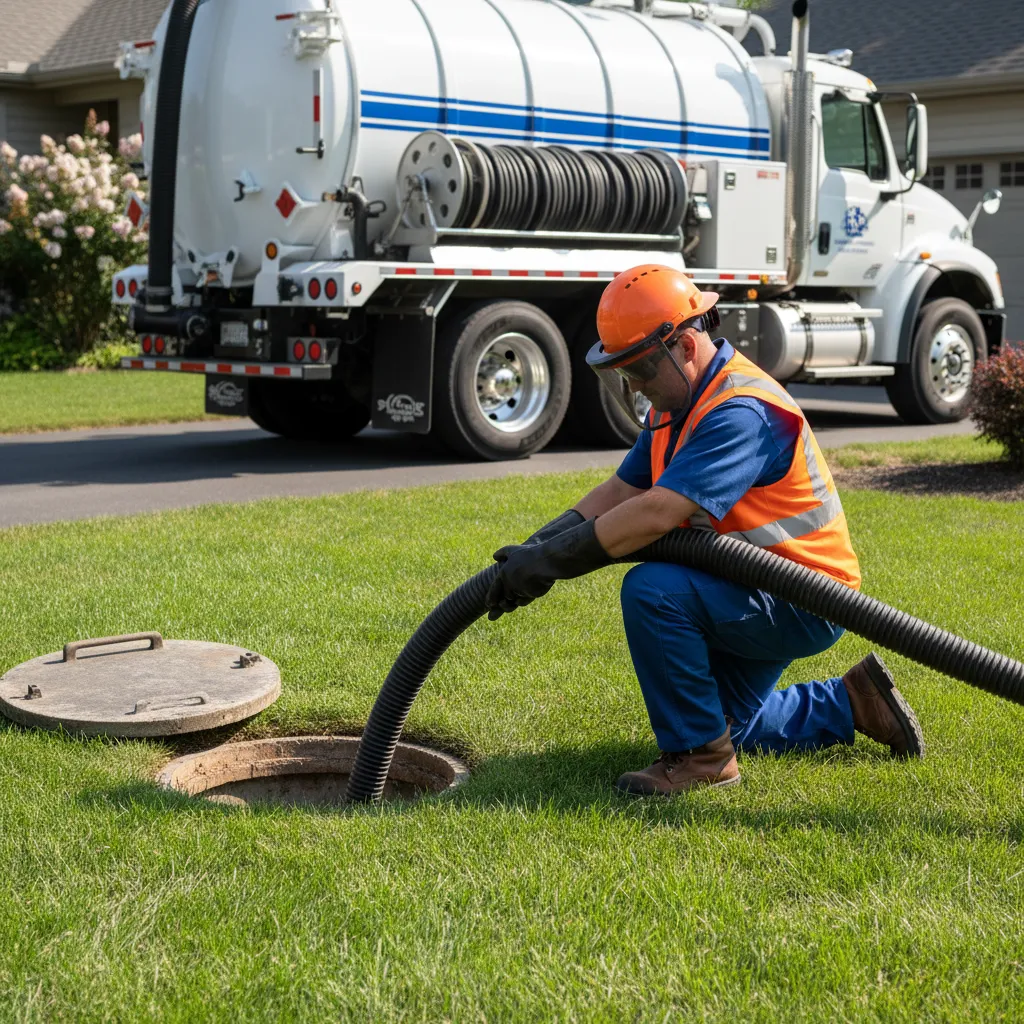
We operate a fleet of high capacity vacuum trucks purpose built for commercial applications. These aren’t residential pump rigs. Our trucks haul larger volumes of septage, sludge, and effluent from oversized concrete tanks, fiberglass tanks, and polyethylene tanks found at commercial properties. We service restaurants, hotels, office parks, retail centers, manufacturing facilities, and municipal buildings across the Lakes Region. Our plumbing service and sewer solutions cover every type of commercial property.
Our technicians don’t just pump and leave. They inspect baffles, check effluent filters, evaluate inlet and outlet pipes, and assess sludge and scum levels in every compartment. You get a written condition report after each visit. That report helps you plan ahead and avoid surprise failures. We identify every potential issue before it becomes a major problem, keeping your plumbing and septic systems working properly.
Lakes Region Septic is fully licensed, insured, and compliant with all state and federal regulations governing commercial septage collection, transport, and disposal. We haul waste only to approved treatment plants and disposal sites. Every load is documented.
We stand behind our work with transparent pricing, no hidden fees, and a satisfaction guarantee. Our maintenance contracts lock in your pumping schedule at a guaranteed rate. You’ll know exactly what you’re paying and when your next service is due. Request a free estimate or quote today. That’s the kind of reliability commercial property owners and facility managers need from a dedicated septic service provider.
Signs You Need Commercial Septic Pumping
Commercial septic pumping is overdue when your system starts showing warning signs. Ignoring these signals leads to expensive repairs, health code violations, and potential business shutdowns. Early repair saves money.
Slow drains throughout the building:
When multiple fixtures drain sluggishly at the same time, your septic tank is likely full of solids. Slow drains in every sink and toilet indicate a plumbing system backup. Sludge has accumulated past the outlet baffle, and effluent can’t flow freely to the drain field. A full commercial pump out restores proper drainage immediately. We also offer drain cleaning and drain service solutions.
Foul odors near the tank or drain field:
Sewage smells around your property mean anaerobic gases are escaping through access ports, risers, or saturated lateral lines. This happens when the tank hasn’t been pumped on schedule and organic matter is decomposing beyond the system’s capacity. Following a regular pumping schedule and monitoring what gets flushed down drains prevents these problems. Your customers and employees will notice before you do.
Standing water or soggy ground over the leach field:
Saturated soil above your absorption trenches indicates the drain field is failing because the septic tank is discharging too many suspended solids. The biomat layer has thickened and the soil can no longer percolate effluent. Consider whether the tank could also be leaking. Pumping the tank and inspecting the distribution box can identify whether the problem is reversible.
Grease trap alarms or overflow:
Commercial kitchens with grease interceptors that trigger float switch alarms or overflow into floor drains need immediate pumping. Grease laden wastewater backs up fast and creates blockages in downstream pipes and the septic tank itself. Keep your kitchen running smoothly with routine service.
Health department notices or failed inspections:
If an inspector has flagged your system for noncompliance, scheduled commercial septic pumping with a certified contractor is the first corrective step. Lakes Region Septic provides documentation that satisfies regulatory requirements and gets your facility back into compliant status. We offer more than what typical plumbers provide.
Our Commercial Septic Pumping Process
Commercial septic pumping is a systematic process that Lakes Region Septic performs in clearly defined steps.

Site assessment and tank location
Our technician arrives and locates all septic system components using facility records, GPS coordinates, or electronic locating equipment. We identify every access port, riser, and manhole cover on the property.
Tank access and initial inspection
We remove tank lids and visually inspect sludge depth, scum thickness, and effluent clarity in each compartment. We check baffles, tee fittings, and effluent filters for damage or blockage before pumping begins.
Vacuum extraction
Our high capacity vacuum truck connects to the tank and pumps out all septage, sludge, and liquid. We agitate settled solids to ensure complete removal. For multi compartment tanks, we pump each section individually. Grease traps and interceptors get the same thorough treatment. High pressure jetting is available when needed.
Post pump inspection
With the tank empty, we inspect the concrete or fiberglass walls, inlet pipe, outlet pipe, and baffle condition. We note any cracks, corrosion, or structural concerns in your service report. Addressing these findings early helps reduce future repair costs.
Documentation and disposal
We seal the tank, replace all lids and risers, and record the volume pumped. All septage is transported to a licensed treatment plant or approved disposal site. You receive a detailed service report and a recommended date for your next commercial pumping.
Brands We Use
Lakes Region Septic relies on these trusted brands:


Every piece of equipment we bring to your site is maintained, calibrated, and operated by trained technicians.
Other Services
Service Category 1
Commercial septic pumping
Commercial septic service
Commercial grease trap pumping
Commercial septic maintenance
Commercial septic tank cleaning
Sewer and septic tank cleaning
Service Category 2
Commercial septic tank pumping
Business septic system pumping
Commercial grease interceptor cleaning
Scheduled commercial septic pump out
Commercial holding tank pumping
Commercial holding tank pumping
Service Category 3
Septage hauling for businesses
Vacuum truck septic extraction
FOG removal and disposal
Preventive septic tank service
Decentralized wastewater system service
Decentralized wastewater system service
FAQs About Commercial Septic Pumping
What is commercial septic pumping?
Commercial septic pumping is the process of vacuuming out accumulated sludge, scum, and effluent from septic tanks, grease traps, and holding tanks at commercial properties. It uses high capacity vacuum trucks operated by licensed technicians who transport the septage to approved disposal facilities.
How often does a commercial septic tank need pumping?
Frequency depends on tank size, wastewater volume, and the type of business. Restaurants with grease interceptors may need monthly service. Office buildings and retail facilities typically require pumping every one to three years. Lakes Region Septic evaluates your system and builds a pumping schedule matched to your actual usage.
When should I schedule commercial septic pumping?
Schedule pumping before sludge and scum levels reach two thirds of your tank’s capacity. Don’t wait for backups or odors. Routine scheduled service prevents emergency situations and keeps your system compliant with health department regulations.
Why is commercial septic pumping different from residential?
Commercial systems handle higher wastewater volumes, process grease laden discharge from kitchens, and face stricter regulatory oversight. Unlike a typical house with a residential system, commercial facilities generate far more waste. The tanks are larger, the pumping equipment is heavier duty, and the disposal documentation requirements are more detailed.
Can commercial septic pumping prevent drain field failure?
Yes. Regular pumping removes solids before they escape into the distribution box and lateral lines. When solids reach the drain field, they clog perforated pipes and create an impermeable biomat layer in the absorption trenches. Consistent pumping is the single most effective way to protect your leach field.
Does Lakes Region Septic provide pumping documentation for inspectors?
We provide complete service records including date of service, volume pumped, tank condition, and disposal site information. These records satisfy health department and EPA compliance requirements for commercial septic system operators.