
Residential Septic Pumping
Professional septic tank pump outs and residential plumbing services for homeowners across the Lakes Region – your go-to service for comprehensive septic solutions
Available 24/7 – Call Now for a Free Quote
Why Choose Lakes Region Septic?
Nationwide service coverage
Licensed and insured technicians
Same-day emergency service
Satisfaction guarantee on every job
5 Highlights on Residential Septic Pumping
Thorough tank pump outs
Our vacuum trucks suction all sludge, scum, and effluent from every compartment of your septic tank, leaving it clean and fully drained for years of reliable operation. Our experienced technicians deliver high-quality service that provides peace of mind for every customer.
Drain field protection
Routine residential septic pumping and preventive maintenance prevents solids from migrating into your leach field, distribution box, and lateral lines, which saves you thousands in absorption field repairs and potential water damage.
Licensed and certified technicians
Every crew member holds current state certification and follows health department regulations for septage handling, transport, and disposal at approved receiving stations. Our dedicated team prioritizes health and safety, sanitation, and quality assurance on every job.
Accurate tank inspections included
We measure sludge and scum layers, inspect inlet and outlet baffles, check effluent filters, and test float switches during every residential pumping visit. We use video inspection and advanced leak detection to diagnose hidden leaks and address issues before they become a major issue.
Responsible septage disposal
All waste we haul goes to permitted treatment plants and disposal sites, so your property stays compliant and local groundwater and water supply stays uncontaminated. We support water conservation and sustainability through responsible waste management.
Why Choose Our Residential Septic Pumping
Residential septic pumping is a job that demands the right equipment, proper licensing, and real field experience. As a family-owned business, Lakes Region Septic delivers all three on every service call with expert-level service and attention to detail.
We operate a fleet of professional vacuum trucks sized specifically for residential septic tanks. Our rigs carry enough capacity to pump out tanks ranging from 1,000 to 2,000 gallons in a single visit. No return trips. No extra charges. Our efficient process and transparent pricing means you get a clear estimate upfront.
Our technicians don’t just pump and leave. They inspect every accessible component of your septic system and plumbing systems – baffles, risers, access lids, effluent filters, pipes, valves, and the divider wall between compartments. You’ll get a written condition report after each service so you know exactly where your system stands. We respond to customers with professional plumbing expertise and customer service that earns five-star reviews.
Lakes Region Septic is fully licensed, insured, and compliant with all local and state regulations for septage transport and disposal. We maintain active permits with area treatment plants and receiving stations.
We also guarantee our scheduling. When you book a residential septic pumping appointment, we show up on time and finish the job that day with on-time service and same-day service availability. Emergency pump outs and emergency services are available for backed up or overflowing tanks. Our pricing is flat rate with no hidden fees, and we’ll walk you through everything we find before we leave your property. Call for a free quote any hour of the day.
Trusted septic service starts with a company that treats your home like its own. Our comprehensive services provide hassle-free service and long-term solutions that protect your property investment.
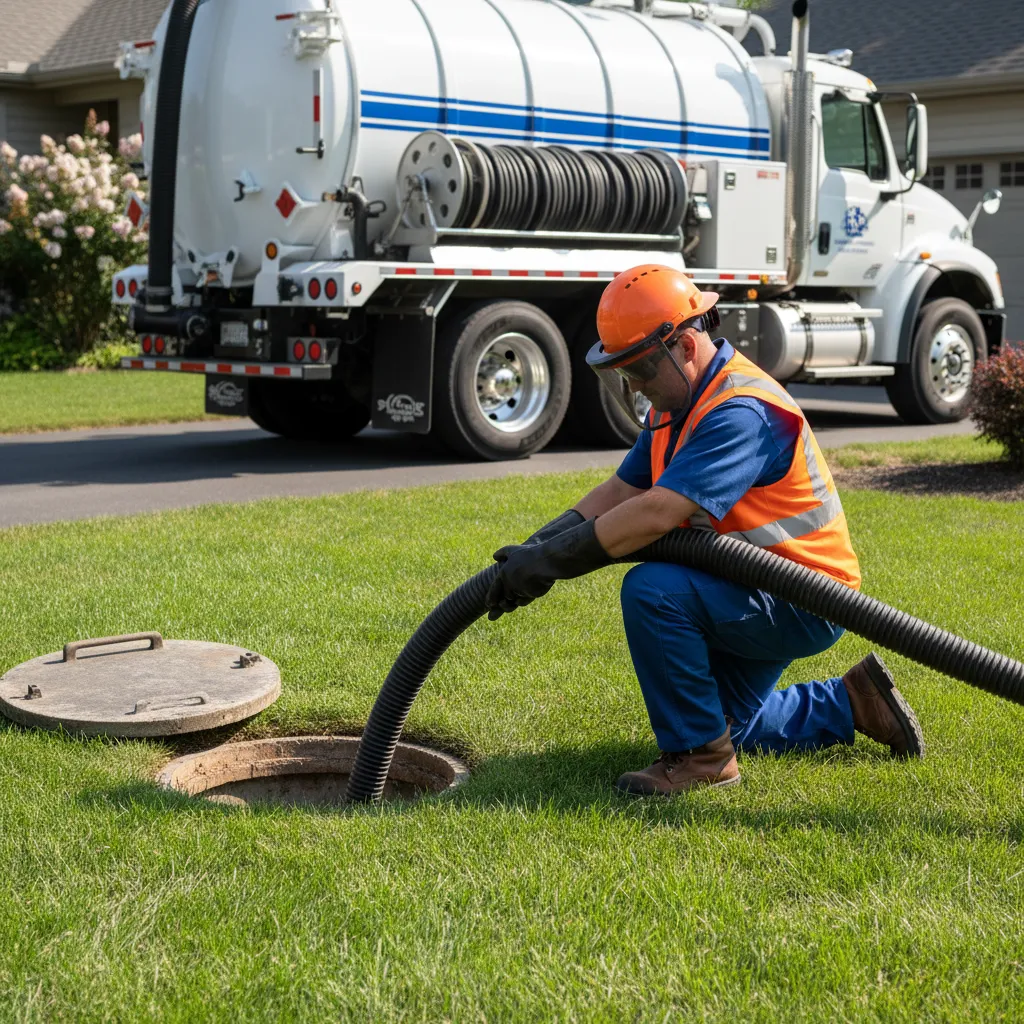
Signs You Need Residential Septic Pumping
Residential septic pumping is overdue when your system starts sending clear warning signals. Recognizing these signs early protects your drain field, your property, and your wallet. Don’t let a minor issue become a major issue that requires costly restoration.
Slow drains throughout the house:
When every sink, shower, bathroom fixture, and toilet drains sluggishly at the same time, your septic tank is likely full. Accumulated sludge and scum layers leave little room for incoming wastewater, and effluent can’t exit through the outlet baffle fast enough. This isn’t a clogged pipe problem or clogged drains that plumbers typically fix – it’s a full tank problem that only pumping will fix. Plumbing issues like slow sinks and showers often indicate these critical plumbing concerns.
Sewage odors near the tank or yard:
A foul, putrid smell around your tank lid, cleanout, or drain field means gases are escaping from an overfull system. This represents a potential hazard and health and safety concern. Anaerobic decomposition inside a saturated tank produces hydrogen sulfide and methane. These odorous gases seep through cracked risers, loose access lids, corroded pipes, and soggy soil above the absorption field. Contact us for immediate assistance to address this issue.
Standing water or soggy patches over the leach field:
When your septic tank isn’t pumped on schedule, suspended solids flow into the distribution box and clog lateral lines. Effluent that can’t percolate into the soil rises to the surface, risking potential flood conditions and water leaks into your yard. Waterlogged, murky patches in your yard are a direct sign of drain field failure caused by a neglected tank that can cause serious damage to your property and affect water quality.
Gurgling sounds in your plumbing:
Air trapped in your sewer line creates gurgling noises when fixtures drain. A full septic tank forces wastewater to back up into the pipe and piping system, displacing air and creating that distinctive bubbling sound in toilets and drains. This pressure buildup in your plumbing indicates issues that emergency plumbers or septic professionals should diagnose promptly.
Septic alarm activation:
If your system has a pump chamber with a float switch, an activated septic alarm means effluent has reached a critical level. The pump can’t keep up because the tank upstream hasn’t been pumped. This is an emergency situation and one of those plumbing emergencies that requires immediate residential septic pumping to prevent raw sewage backup into your home. We arrive quickly to respond and provide rapid containment. Our emergency plumbing team will stop leak situations and ensure the problem is resolved same day.
Our Residential Septic Pumping Process
Residential septic pumping is a systematic process that our crews follow the same way every time. Here’s what happens from arrival to departure. Our expert technicians deliver cost-effective service and year-round service availability.

Locate and access the tank
Our technician uses property records and a probe rod to locate your septic tank. We uncover and remove the access lid or riser cap. If your tank lacks risers, we’ll excavate down to the lid with a hand shovel or recommend riser installation for future access. We also check faucets and fixtures to verify the system connection.
Measure sludge and scum
Before we pump, we measure the sludge layer at the bottom and the scum layer floating on top. These measurements tell us how fast your tank accumulates solids and when you’ll need your next pump out. This routine maintenance approach ensures efficiency and helps us provide an accurate estimate for future service.
Pump out the tank
We connect our vacuum truck hose to the tank opening and suction out all contents – sludge, effluent, and scum. Our technician agitates settled solids with the hose nozzle to break down compacted material and ensure a complete pump out. Both compartments get fully drained. For stubborn blockages, we use jetting and line cleaning techniques to clear root intrusion and other obstructions.
Inspect internal components.
With the tank empty, we visually inspect the inlet baffle, outlet baffle, effluent filter, divider wall, and tank walls for cracks, corrosion, or deterioration. We clean the effluent filter and note any needed repairs. Our plumbing repair expertise allows us to identify leak detection issues, frozen pipes damage, and recommend repair service or re-piping when necessary.
Close up and report
We reseal the access lid, backfill any excavated soil, and provide you with a detailed service report. This report includes sludge and scum measurements, component conditions, photos, and a recommended pumping schedule for your household size. Our quality service ensures all fixes are documented for your records.
Brands We Use
Lakes Region Septic trusts these top rated brands on every job.





Every piece of equipment we use meets or exceeds industry safety standards.
Other Services
Service Category 1
Residential septic pumping
Septic tank cleaning
Septic pump out
Residential septic maintenance
Septic tank emptying
Service Category 2
Home septic tank pumping
Residential septic service
House septic pumping
Homeowner septic pumping
Residential wastewater pumping
Service Category 3
Septic tank pump out service
Sludge and scum removal
Vacuum truck septic service
Effluent filter cleaning
Drain field protection service
FAQs About Residential Septic Pumping
What is residential septic pumping?
Residential septic pumping is the process of removing accumulated sludge, scum, and effluent from a home’s septic tank using a vacuum truck. A technician suctions out all waste material, inspects internal components like baffles and filters, and hauls the septage to a licensed treatment plant or disposal site. This essential service protects your home’s water supply and prevents emergencies that require emergency plumbers.
When should I schedule septic pumping?
Most residential septic tanks need pumping every three to five years. Household size, tank capacity, water usage, and garbage disposals use all affect the schedule. A family of four with a 1,000 gallon tank typically needs pumping closer to every three years. Your technician will recommend a specific interval based on measured sludge and scum levels. Consider how much water you use through hot water heaters, water heaters, showers, faucets, bidets, and water pumps when estimating your needs.
Why does my septic tank need regular pumping?
Solids accumulate in your tank over time. Bacteria break down some organic material, but inorganic solids, grease, and non biodegradable items settle as sludge or float as scum. Without routine pumping, these layers grow until solids escape into your drain field and clog the soil absorption system. Replacing a failed leach field costs ten to thirty times more than a scheduled pump out. Regular service also supports water treatment efficiency and protects water quality throughout your property. Issues like hard water, greywater overflow, and burst pipes can result from a neglected system.
How long does a residential septic pumping visit take?
A standard pump out takes 30 to 60 minutes once the tank is accessed. If we need to locate a buried lid or excavate to reach the access point, add another 15 to 30 minutes. The full visit, including inspection and reporting, usually wraps up within 90 minutes. We deliver on-time service and arrive within the scheduled window every time.
Can I pump my own septic tank?
No. Residential septic pumping requires a licensed vacuum truck, certified operators, and approved disposal arrangements. Septage contains hazardous pathogens, including coliform bacteria and other contaminants, that must be handled and disposed of according to state and local health department regulations. Only a permitted septic contractor can legally pump and haul residential septage. Professional plumbing expertise and sewer services require proper licensing that general plumbers may not have for this specialized work.
Does pumping fix a backed up drain field?
Pumping the tank is the first step. It removes the source of solids that migrated into your leach field. If the biomat buildup in your percolation bed is minor, resting the field after a pump out may allow it to recover. Severe clogging in lateral lines or a saturated absorption field may require additional remediation, repair, or replacement. We can provide drain cleaning, sewer cleaning, and trenchless sewer solutions for more serious issues. Our sump pump and water pumps expertise also helps address related water pressure and flood concerns during restoration work. For bathroom renovations and remodel projects that affect your plumbing systems, we offer expert guidance on maintaining optimal system function with tankless water heaters, water softeners, and low-flow fixtures for water conservation.